The story is just about done. I'm going to be emailing it later tonight to Nathan, just after I finish it up and look over errors. The rest of the story will be posted on here day by day (it's ten pages, so it will be done around Wednesday), but if you want a complete copy, leave me a comment with either your email address or some method of contacting you, and I'll send it to you.
Sadly, it does not look like Nathan has finished his story. We will hopefully meet up this weekend, and he might have his story done by then. I might post something about it, if it's interesting or productive or both.
Enjoy.
****
And thus, on this certain night it came to pass that the final table of Hold ‘em held six people. Darius. his client, Damien, two professors, and the kid sat at the table closest to the fire place. Darius was right next to the dealer, and to Darius’s right was his client, the kid, the two professors, and then Damien. Darius was seated closest to the fire place. A fire powered by gas was going—the night had become somewhat chilly. Damien noticed that the pokers standing on their rack were useless, only vestiges of a more difficult time that had passed. The fact that they were ornamental now seemed only to mock those times when they were necessary. He let it pass. They were just pokers.
Damien switched his attention to the players at the table. Although he had played well this evening, he found that he was easily distracted by the slightest things, and on the final table it was important to focus. Damien turned to watch the kid. Anyone could take this kid out quickly, because although he was good, he lacked focus. He missed obvious things. Darius’s client was more formidable, because if he kept getting lucky, then there was nothing to be done. Damien thought about Darius’s speech about the gambler’s fallacy; he figured the client could not be lucky all the time. Damien was not sure about Darius. He had played Darius before in Hold ‘em, and Darius could get unpredictable. Damien did not seem to mind if he lost to Darius. The professors seemed easy enough to beat. They were colleagues teaching philosophy at the local university. They had mostly talked all night about different aspects of philosophy (one of whom—Damien did not know which—made the joke about Hume), cracking esoteric jokes and discussing different methods and such. This talking served as a distraction, and could be used against them. They mostly talked among themselves, not expecting anyone to understand, but Darius felt the need to interject every once in a while. The professors tended to ignore him. Darius would just smile.
After an hour of playing the final table, the professors had moved on to the great "debate" (if it could so be called) between Dr. Karl Popper and Herr Ludwig Wittgenstein. It was clear that both the professors were of a Wittgensteinian leaning, just by the tone of voice they used when referring to Popper. Apparently one of them had read a book about the debate. Damien, as well as the kid and Darius’s client, were just focusing on the cards being played, and were lost in their own thoughts. Darius, however, was listening intently to the conversation, opening his mouth partly as if to say something, but letting no breath escape. The discourse was so riveting that Darius and the professors were blindly placing blinds, folding as soon as someone bet, and not even looking at the flop, the turn, or even the river.
This distraction was infectious, and Damien found himself finally pondering the events leading up to the present moment, though probably not causally leading up to the moment. Damien thought about Mary K. and their strange encounter. He found himself wondering whether, in all this spontaneous caprice, if that wasn’t planned. Darius was so insistent, and she acted so strangely... Damien just lost the hand. Top pair had taken him. It was the kid. Damien needed to focus. But Mary K. returned momentarily in his mind’s eye, dressed in the scarf and vestments of a Queen, the locket around her neck now enlarged and ruby-colored. She was holding her scepter and laughing. He could not be subjected to this. The flop came out and it was horrible.
The kid put in $20,000 as a bet. Damien folded: he could not lose again.
"In all honesty, Popper was just jealous of the genius that was Wittgenstein."
"I beg to differ," Darius said in a demanding tone.
"I think you’re right to some extent. Why would Popper turn down a lectureship in Cambridge unless he knew he would be outshone?"
"Yes, he belonged in New Zealand, out of the way."
"That’s unduly harsh, gentlemen." Darius spoke with a smile.
The kid went all in. Damien was staring at trip aces. What was this kid thinking? The kid looked to have the other ace. Something about his smile told him so. Damien called—sure enough, the kid had the last ace, and, since they were about even in chips prior to the call, the kid was knocked out of the final table. The kid got up and shook Damien’s hand, but he looked very tired. Damien thought he almost looked relieved to be out.
Monday, August 01, 2005

Sunday, July 31, 2005
Thursday, July 28, 2005
Seven: For No Tomorrow
Yeah. Here's an incomplete page seven. There most likely will not be a page eight tomorrow unless I managed to somehow pull it off. We'll see.
****
After the fire that spontaneity had instigated burned out, a new burning began on the long walk back to the casino. It was the burning of the dream, of being tossed by the queen into the depths of an embracing hell. He walked in silence next to pretty Mary K. They did not hold hands. Damien looked intently on the ground, watching the grass and dirt that had betrayed him. He felt dizzy, and hot, and charge-less. Ionized into neutrality. He could not look at her, and he knew that she would not look at him. The term that he so loathed, the feminine term that rang of purity could no longer be applied to him, a product of reproductive loss. He decided that all there was left to do was play poker.
Thus, after poking her, he played poker. After holding her, he played Hold ‘em. He saw no away around it—Darius had forwarded the buy-in of $10,000 (business was very very good he seemed to say with a wink from across the table), and he could stand to win $250,000. He played Hold ‘em often, often enough to pick up the ins and outs of the game, how to read the amateurs, when to fold.
He liked the game. The outcome was hard to anticipate and somehow predictable, it was individual and communal, it was easy and yet complex. He could not explain the joy he got from winning a hand when it was just dumb luck, nor could he explain the feeling of loss when someone else had dumb luck. Damien considered himself good at the game. It required more skill and know-how than betting on sports, but it was more of a gamble. Maybe Darius was right.
There were a majority of amateurs at tonight’s tournament, pretentious and pretending that they knew what they were doing. The dealer often had to tell one of the players at the table, laughing at some abstruse joke about the David Hume’s death being the birth of our nation, that he was in the big blind. The player would then put in the wrong amount of chips, and when the dealer corrected the error—"sorry, sorry. I thought we were further along in the game." Damien, annoyed at the poor affect of this player, decided to take him out as soon as possible. A spade flush dug him his grave. Damien knew that this old, rich man would not see it coming. Damien relished in his dumb luck.
Darius was a good poker player as well. He was on the conservative side, but when he had it, one could never tell. Darius was sitting next to his "client," so Damien assumed, and Darius would occasionally whisper to the man on his right and laugh. Darius’s client, a youngish man of about thirty, was not much of a poker player, but he continually got lucky, knocking out various players with straights and sets and flushes. Darius semi-bluffed on a pair of twos and took a big pot, nonchalantly showing his cards afterward to get the guy sitting next to the dealer on tilt.
"I had a pair of kings!"
"You shoulda called." Darius smiled. Darius always smiled. Even when he lost a big hand to this twenty-one year old kid (most likely a son of a member) three seats down, a set of twos falling to a full house (nines full of twos), Darius smiled. Darius doubled up when the kid did not see a four card straight on the table. Darius was like that, smiling, but vengeful.
****
After the fire that spontaneity had instigated burned out, a new burning began on the long walk back to the casino. It was the burning of the dream, of being tossed by the queen into the depths of an embracing hell. He walked in silence next to pretty Mary K. They did not hold hands. Damien looked intently on the ground, watching the grass and dirt that had betrayed him. He felt dizzy, and hot, and charge-less. Ionized into neutrality. He could not look at her, and he knew that she would not look at him. The term that he so loathed, the feminine term that rang of purity could no longer be applied to him, a product of reproductive loss. He decided that all there was left to do was play poker.
Thus, after poking her, he played poker. After holding her, he played Hold ‘em. He saw no away around it—Darius had forwarded the buy-in of $10,000 (business was very very good he seemed to say with a wink from across the table), and he could stand to win $250,000. He played Hold ‘em often, often enough to pick up the ins and outs of the game, how to read the amateurs, when to fold.
He liked the game. The outcome was hard to anticipate and somehow predictable, it was individual and communal, it was easy and yet complex. He could not explain the joy he got from winning a hand when it was just dumb luck, nor could he explain the feeling of loss when someone else had dumb luck. Damien considered himself good at the game. It required more skill and know-how than betting on sports, but it was more of a gamble. Maybe Darius was right.
There were a majority of amateurs at tonight’s tournament, pretentious and pretending that they knew what they were doing. The dealer often had to tell one of the players at the table, laughing at some abstruse joke about the David Hume’s death being the birth of our nation, that he was in the big blind. The player would then put in the wrong amount of chips, and when the dealer corrected the error—"sorry, sorry. I thought we were further along in the game." Damien, annoyed at the poor affect of this player, decided to take him out as soon as possible. A spade flush dug him his grave. Damien knew that this old, rich man would not see it coming. Damien relished in his dumb luck.
Darius was a good poker player as well. He was on the conservative side, but when he had it, one could never tell. Darius was sitting next to his "client," so Damien assumed, and Darius would occasionally whisper to the man on his right and laugh. Darius’s client, a youngish man of about thirty, was not much of a poker player, but he continually got lucky, knocking out various players with straights and sets and flushes. Darius semi-bluffed on a pair of twos and took a big pot, nonchalantly showing his cards afterward to get the guy sitting next to the dealer on tilt.
"I had a pair of kings!"
"You shoulda called." Darius smiled. Darius always smiled. Even when he lost a big hand to this twenty-one year old kid (most likely a son of a member) three seats down, a set of twos falling to a full house (nines full of twos), Darius smiled. Darius doubled up when the kid did not see a four card straight on the table. Darius was like that, smiling, but vengeful.
Wednesday, July 27, 2005
Have You Seen Her?
I finished page six, and there looks to be a page seven for tomorrow.
****
She showed him the casino. She took him inside the plain building, and found plain art-work sparsely littered about the room. There were eight to ten rounded oblong tables, indented on one side to mark where the dealer sits, black rims encasing a green sea as smooth as velvet. There was a fireplace directly across the entrance, with fancy pokers off to the right in a golden holder. That was all that was in the casino. Damien noticed the stark contrast from the hall and the casino, and Mary explained that members had complained of too much distraction while gambling—they even had to remove the bar (it instead being replaced with a register to cash in one’s chips). One could, however, still order food and drinks from the dining hall. He nodded in a vacant agreement. The casino had a wonderful view outside of the man-made lake near the sixth hole of the golf course.
She showed him the pool area, the massage parlor, the sauna. She showed him the garden with its botanical marvels. She showed him the walk-in humidor. She showed him the stables with the faux race track, and the trails that extended into the hills of the 158 acres. She told him that some of the members would hunt those fields, killing small game. She showed him the monument to the original members and the owner of the club, a huge bronze Xerxes, fiercely holding a sword high in the air, charging at nothing but stuffed bank accounts. She showed him wealth, status, and power. She showed him a superficial life, where caprice was the order of the day. She showed him a life that he very much despised, a life that Darius very much wanted to lead. It dawned on him fuzzily that he and Darius would soon be parting ways.
The sun was about to set when pretty Mary K. said, "there’s one last place I need to show you." They left the inaccurate monument, (Xerxes fought no battles, but would rather watch the results from afar) and headed past the casino toward the golf course. Damien was more sober: his steps were sure, although he was now holding Mary K.’s hand. In the cool air he felt flushed, hot, and charged. He felt like lightning striking; he had a feeling of falling fast, faster, fastest. He was being pulled downward by a gravity that only sobriety would recognize.
They headed toward the sixth hole, onto the green, the rough, and then out of bounds. They were behind the lake, past the bushes, and came upon a tool shed.
"How do you know about this place?"
"I started here as a caddy; you discover things when you’re a caddy."
"How old are you?"
"Old enough."
They embraced. They kissed. They removed garments as if they were on fire, and they were on fire. Damien was no longer tame or shy, but alive, electric. Everything was moving—the sun setting, their hands, the bushes in the wind—everything was mercurial. They did as spontaneity mandated, and it mandated much. It ordered them to thrust, moan, rise, and fall. It commanded them to live and die. It pushed them to know each other. It coerced them into frantic motion, a silly, awkward dance stuck on repeat. And when they thought they were finished, spontaneity demanded it again.
Pretty Mary K. was more beautiful with her eyes reflecting the rising moon. She didn’t know his secret, or at least he thought she didn’t—he never knew what women knew when they knew someone. He noticed a locket in the shape of a heart around her neck, and said, without thinking:
"You’re my queen of hearts."
"You should go, it’s almost time for the tournament." She got up and began dressing.
"Okay." He followed suit.
****
She showed him the casino. She took him inside the plain building, and found plain art-work sparsely littered about the room. There were eight to ten rounded oblong tables, indented on one side to mark where the dealer sits, black rims encasing a green sea as smooth as velvet. There was a fireplace directly across the entrance, with fancy pokers off to the right in a golden holder. That was all that was in the casino. Damien noticed the stark contrast from the hall and the casino, and Mary explained that members had complained of too much distraction while gambling—they even had to remove the bar (it instead being replaced with a register to cash in one’s chips). One could, however, still order food and drinks from the dining hall. He nodded in a vacant agreement. The casino had a wonderful view outside of the man-made lake near the sixth hole of the golf course.
She showed him the pool area, the massage parlor, the sauna. She showed him the garden with its botanical marvels. She showed him the walk-in humidor. She showed him the stables with the faux race track, and the trails that extended into the hills of the 158 acres. She told him that some of the members would hunt those fields, killing small game. She showed him the monument to the original members and the owner of the club, a huge bronze Xerxes, fiercely holding a sword high in the air, charging at nothing but stuffed bank accounts. She showed him wealth, status, and power. She showed him a superficial life, where caprice was the order of the day. She showed him a life that he very much despised, a life that Darius very much wanted to lead. It dawned on him fuzzily that he and Darius would soon be parting ways.
The sun was about to set when pretty Mary K. said, "there’s one last place I need to show you." They left the inaccurate monument, (Xerxes fought no battles, but would rather watch the results from afar) and headed past the casino toward the golf course. Damien was more sober: his steps were sure, although he was now holding Mary K.’s hand. In the cool air he felt flushed, hot, and charged. He felt like lightning striking; he had a feeling of falling fast, faster, fastest. He was being pulled downward by a gravity that only sobriety would recognize.
They headed toward the sixth hole, onto the green, the rough, and then out of bounds. They were behind the lake, past the bushes, and came upon a tool shed.
"How do you know about this place?"
"I started here as a caddy; you discover things when you’re a caddy."
"How old are you?"
"Old enough."
They embraced. They kissed. They removed garments as if they were on fire, and they were on fire. Damien was no longer tame or shy, but alive, electric. Everything was moving—the sun setting, their hands, the bushes in the wind—everything was mercurial. They did as spontaneity mandated, and it mandated much. It ordered them to thrust, moan, rise, and fall. It commanded them to live and die. It pushed them to know each other. It coerced them into frantic motion, a silly, awkward dance stuck on repeat. And when they thought they were finished, spontaneity demanded it again.
Pretty Mary K. was more beautiful with her eyes reflecting the rising moon. She didn’t know his secret, or at least he thought she didn’t—he never knew what women knew when they knew someone. He noticed a locket in the shape of a heart around her neck, and said, without thinking:
"You’re my queen of hearts."
"You should go, it’s almost time for the tournament." She got up and began dressing.
"Okay." He followed suit.
Tuesday, July 26, 2005
I'm Already Full of These Useless Stories...
Time is running out. I am running out of pages to post. This fifth one here is complete, but I have not yet completed the sixth. I may be able to get to the sixth one done by tomorrow, but I do not know about the seventh, eighth, ninth, etc. I don't even know how many pages this story will be. I have five more days left until this is due, so conceivably it could be about ten or eleven pages total. However, there is only one more scene I have to write (with some summary), so it could be shorter than that. I guess I can only try as best as I can and see how it turns out. Do not be surprised if a day goes by and I have not posted another page. I may have to keep posting pages after August first until the story is complete. I don't know. Enjoy page five.
****
Damien was confused, "I thought you were paying."
"You didn’t get her number, therefore you have to pay."
"But you said that all I had to do was ask her, and I did." His voice steadily rose, despite Mary K.’s presence. Courage uplifted while the body made low.
"Well," a moment’s hesitation this time, no drama or philosophy, "I’ll pay you back. Can you get this one for me?"
Darius had never done this before. Darius was one for his word, albeit he rarely made a promise to anyone. If he told you he would do something, he generally would do it. Like the time that Damien had placed a bet on the San Diego Chargers in some play-off game. It was obvious that they would lose, given the history of the team with the opponent (Damien could not remember the team now), but he placed the bet anyway. Darius told him, "if the Chargers win, I won’t take any cut– you get the whole enchilada." The Chargers had won by one. A field goal in the last quarter– gripping, really. Damien didn’t have to pay for lunch that day, and he got all the money due to him.
Now that he had to pay, the blurry tab looked like $250, Damien felt confused, and all the more so because his head was reeling. He had lost. Mary K.’s eyes were dancing between the two guests, but her expression was flat. He conceded. He pulled out his wallet, a plastic card, and handed it to Mary K. who in one sweeping motion took it and walked away to swipe the card.
With that, Darius smiled, got up, and left heading right. He passed Hermes and some nudes bathing, down the great hall to disappear into greatness. He did not care where his bookie was going. Mary K. returned, smiling somewhat. She was certainly old enough now. He smiled. He sighed as he signed. He asked where the bar was.
"You’ve had enough."
"Well, I have been abandoned, so I will drink with abandon."
"Cute." She smirked. "Why don’t you go home?"
"I’m here for the Hold ‘em Tournament."
"Ah. Well, my shift ends in an hour. If you want to meet me afterward, I can show you around."
Damien didn’t fully realize the situation. He nodded.
"Where?"
"Just go out the hall, exit from there," she pointed to a door at the side of the building that Damien did not notice before, "and walk around behind the building."
"Okay...okay." She left him, and he was alone.
He stumbled to the place where he thought they would meet, and found her a hundred yards off, waving and laughing. He had found the bar in the meantime, and drank with the abandon of the zealot alcoholic, drowning the dream with the hope of a delirium tremens. Every sip made him hate this place more. Every sip made his dream more clear, and the world more blurry. Every sip made him and destroyed him. Every sip was billed to Darius.
"So you found the bar." She was smiling fully now, exposing perfect teeth in a perfect mouth, made less perfect by jaundiced eyes.
"You seem happy... to be off...of work."
She giggled. How old was she?
"Let’s walk around and sober you up."
****
Damien was confused, "I thought you were paying."
"You didn’t get her number, therefore you have to pay."
"But you said that all I had to do was ask her, and I did." His voice steadily rose, despite Mary K.’s presence. Courage uplifted while the body made low.
"Well," a moment’s hesitation this time, no drama or philosophy, "I’ll pay you back. Can you get this one for me?"
Darius had never done this before. Darius was one for his word, albeit he rarely made a promise to anyone. If he told you he would do something, he generally would do it. Like the time that Damien had placed a bet on the San Diego Chargers in some play-off game. It was obvious that they would lose, given the history of the team with the opponent (Damien could not remember the team now), but he placed the bet anyway. Darius told him, "if the Chargers win, I won’t take any cut– you get the whole enchilada." The Chargers had won by one. A field goal in the last quarter– gripping, really. Damien didn’t have to pay for lunch that day, and he got all the money due to him.
Now that he had to pay, the blurry tab looked like $250, Damien felt confused, and all the more so because his head was reeling. He had lost. Mary K.’s eyes were dancing between the two guests, but her expression was flat. He conceded. He pulled out his wallet, a plastic card, and handed it to Mary K. who in one sweeping motion took it and walked away to swipe the card.
With that, Darius smiled, got up, and left heading right. He passed Hermes and some nudes bathing, down the great hall to disappear into greatness. He did not care where his bookie was going. Mary K. returned, smiling somewhat. She was certainly old enough now. He smiled. He sighed as he signed. He asked where the bar was.
"You’ve had enough."
"Well, I have been abandoned, so I will drink with abandon."
"Cute." She smirked. "Why don’t you go home?"
"I’m here for the Hold ‘em Tournament."
"Ah. Well, my shift ends in an hour. If you want to meet me afterward, I can show you around."
Damien didn’t fully realize the situation. He nodded.
"Where?"
"Just go out the hall, exit from there," she pointed to a door at the side of the building that Damien did not notice before, "and walk around behind the building."
"Okay...okay." She left him, and he was alone.
He stumbled to the place where he thought they would meet, and found her a hundred yards off, waving and laughing. He had found the bar in the meantime, and drank with the abandon of the zealot alcoholic, drowning the dream with the hope of a delirium tremens. Every sip made him hate this place more. Every sip made his dream more clear, and the world more blurry. Every sip made him and destroyed him. Every sip was billed to Darius.
"So you found the bar." She was smiling fully now, exposing perfect teeth in a perfect mouth, made less perfect by jaundiced eyes.
"You seem happy... to be off...of work."
She giggled. How old was she?
"Let’s walk around and sober you up."
Monday, July 25, 2005
Page Four
****
"She wants you."
Damien finished the rest in a gulp, and let the oxygen and carbon dioxide escape in invisible bubbles from his head through his mouth. He felt his blood pressure drop. It would be a long lunch, much longer than any they had ever had.
They ordered their meals, and plenty of wine, even though Darius whined plenty about the Bordeaux. Mary K. would glance or glare (slightly inebriated, Damien did not know which) while she served them, and she spoke little. Courage rose swiftly as the drinks were poured downward, and Damien found himself speaking to Darius, not whispering.
"So why’d ya bring us here?"
Darius smiled.
"Poker tournament tonight."
"Hold ‘em?"
"Hold ‘em."
"What time?"
"Eight thirty."
"We’re going to stay here until then?"
"Yeah."
"What are we going to do?"
Darius paused before he answered.
"Well, I’m going to meet with a ‘client’ [Darius made scare quotes with his fingers, Damien’s pet peeve], I don’t know what you’re going to do."
Normally, being thus abandoned would have made Damien upset, but he was still mildly drunk, and accepted his fate.
"Where’s the casino?"
"There’s a map somewhere. You’ll find it. Wander. Err. Become a planet. Have an adventure."
Darius was looking at his watch now. It was a much nicer one than Damien had known him to have in the past. Things were looking up for Darius. He probably suckered some high class businessman into gambling or gamboling or gaming. Darius probably became buddy-buddy with said businessman, hence the invitation to such a grandiose country club (that verged on empire). And Darius not knowing what to do with the guest of a guest pass, as he was girl-less and knew no one that liked him enough to join him, suckered Damien into playing at the tournament. So much for spontaneity.
The meal was finished in silence, with Darius glancing at his watch more and more frequently. Damien had lost interest in whatever it was that he had ordered (or had ordered for him) and focused primarily on the wine. He found himself staring uncontrollably at pretty Mary K. whenever she stopped by to retrieve dirty dishes or refill the wine. It might have been the torpor of the stupor, but he could not turn away. She either did not notice or did not mind. His reactions became sluggish. He began to think that he had had too much. Darius looked slightly different through blurred eyes. Movements seemed faster, time seemed slower. Hermes was mercurial, the maidens seemed unseemly. Like Darius, Damien was all smiles. He could not help but smile, and his mind did not mind this situation.
Mary K. brought the bill, hesitated between the two, and, following a nod from Darius, handed Damien the bill.
"She wants you."
Damien finished the rest in a gulp, and let the oxygen and carbon dioxide escape in invisible bubbles from his head through his mouth. He felt his blood pressure drop. It would be a long lunch, much longer than any they had ever had.
They ordered their meals, and plenty of wine, even though Darius whined plenty about the Bordeaux. Mary K. would glance or glare (slightly inebriated, Damien did not know which) while she served them, and she spoke little. Courage rose swiftly as the drinks were poured downward, and Damien found himself speaking to Darius, not whispering.
"So why’d ya bring us here?"
Darius smiled.
"Poker tournament tonight."
"Hold ‘em?"
"Hold ‘em."
"What time?"
"Eight thirty."
"We’re going to stay here until then?"
"Yeah."
"What are we going to do?"
Darius paused before he answered.
"Well, I’m going to meet with a ‘client’ [Darius made scare quotes with his fingers, Damien’s pet peeve], I don’t know what you’re going to do."
Normally, being thus abandoned would have made Damien upset, but he was still mildly drunk, and accepted his fate.
"Where’s the casino?"
"There’s a map somewhere. You’ll find it. Wander. Err. Become a planet. Have an adventure."
Darius was looking at his watch now. It was a much nicer one than Damien had known him to have in the past. Things were looking up for Darius. He probably suckered some high class businessman into gambling or gamboling or gaming. Darius probably became buddy-buddy with said businessman, hence the invitation to such a grandiose country club (that verged on empire). And Darius not knowing what to do with the guest of a guest pass, as he was girl-less and knew no one that liked him enough to join him, suckered Damien into playing at the tournament. So much for spontaneity.
The meal was finished in silence, with Darius glancing at his watch more and more frequently. Damien had lost interest in whatever it was that he had ordered (or had ordered for him) and focused primarily on the wine. He found himself staring uncontrollably at pretty Mary K. whenever she stopped by to retrieve dirty dishes or refill the wine. It might have been the torpor of the stupor, but he could not turn away. She either did not notice or did not mind. His reactions became sluggish. He began to think that he had had too much. Darius looked slightly different through blurred eyes. Movements seemed faster, time seemed slower. Hermes was mercurial, the maidens seemed unseemly. Like Darius, Damien was all smiles. He could not help but smile, and his mind did not mind this situation.
Mary K. brought the bill, hesitated between the two, and, following a nod from Darius, handed Damien the bill.
Sunday, July 24, 2005
Just Starting to Make It My Obssession
I have finished "A Dead Man in Deptford." I don't know what to read next. I have about two more books from Burgess that I could read, but I think I need to read someone other than Burgess before I start on those--I think that would balance things out. I could read the new Harry Potter... Any suggestions?
This is page three.
****
"Take you for instance," again pausing, this time for dramatic effect, "What do you do for a living? You’re a gambler!" He spoke too loud. Far too loud. Damien looked to see if any one was looking. Darius edged close to him from across the table, nearly upsetting an empty wine glass.
"You, sir, take advantage of both aspects of life, merely by your existence. You accept the gamble of life, as it were, by gambling. And in gambling, you are making a gambol of life. Do you understand?" Darius’s near whisper somehow did not comfort him.
"Yes." He whispered, feeling sheepish and somewhat troubled by this conversation.
"So, why don’t you ask what’s-her-name for her number?"
"I don’t know." Weren’t they supposed to order now?
"If you ask her for her number, I’ll pay for lunch."
"Okay, I’ll ask her."
Damien figured that would end this awkward debacle of a conversation, and he would get rejected and prove to Darius, once and for all, that this matter should never be spoke of again. He also figured that they would not see the maitre d’ until the end of the meal, on their way out possibly, though he held a suspicion that this would be something more than a meal; that this was no ordinary lunch where he and his bookie would go about their lives afterward. He did not understand the whole "day pass" situation, and the thought of not knowing a key detail, and not having a good idea about the outcome left him uncomfortable. Why the Club Persai?
Lost in thought, he wondered why they still had not ordered yet. Darius was blabbing on, something about philosophical puzzles and Wittgenstein–Darius began to scoff, and Damien began to sweat. What was taking so long? The obligation of asking the maitre d’ was bearing down on him, and he could not bear it. He could only play with menu for so long, the linen tablecloth having lost his attention. He thought about his dream, his nightmare. Darius looked like one of the devils glad in his despair. He felt like he was falling again. The sweat was poring in copious amounts now; he wondered if anyone noticed. Darius did not. Darius never noticed anything. He was trying not to retch, despite how wretched he felt. The queen, the near omnipresent queen, forever pervading his thoughts, flashed behind shut eyelids, and when he opened them...
"I’m sorry for the wait, gentlemen." There was ice in her voice. She was not sorry at all.
"We are a little short-handed today, and we just noticed that your section of the restaurant has not been served yet. I will be your waitress this afternoon. My name is Mary."
Pretty Mary K. She seemed older, and it seemed like ages when he first saw her. He felt he already knew her, and that she already knew him, and they already hated each other from previous experience. He couldn’t ask. But Darius would not let it go. He knew that Darius would not let it go. They ordered wine first: a Bordeaux for Darius, and Pinot Grigio for Damien. Damien would need a lot of wine. When Mary K. left, Darius said, "You didn’t ask for her number."
"I was taken off guard."
"I won’t pay for the meal if you don’t ask her number."
"By when?"
"The next time we see her." Darius was intent. It may have been the first time Damien had not seen Darius smile. Hesitantly, he responded.
"Okay. Okay."
She came presently with the wine, and he asked. It was a fumbling, stumbling, mumbling request, followed by much wine. A half glass in a gulp. She responded by walking away. Darius was smiling villainously.
This is page three.
****
"Take you for instance," again pausing, this time for dramatic effect, "What do you do for a living? You’re a gambler!" He spoke too loud. Far too loud. Damien looked to see if any one was looking. Darius edged close to him from across the table, nearly upsetting an empty wine glass.
"You, sir, take advantage of both aspects of life, merely by your existence. You accept the gamble of life, as it were, by gambling. And in gambling, you are making a gambol of life. Do you understand?" Darius’s near whisper somehow did not comfort him.
"Yes." He whispered, feeling sheepish and somewhat troubled by this conversation.
"So, why don’t you ask what’s-her-name for her number?"
"I don’t know." Weren’t they supposed to order now?
"If you ask her for her number, I’ll pay for lunch."
"Okay, I’ll ask her."
Damien figured that would end this awkward debacle of a conversation, and he would get rejected and prove to Darius, once and for all, that this matter should never be spoke of again. He also figured that they would not see the maitre d’ until the end of the meal, on their way out possibly, though he held a suspicion that this would be something more than a meal; that this was no ordinary lunch where he and his bookie would go about their lives afterward. He did not understand the whole "day pass" situation, and the thought of not knowing a key detail, and not having a good idea about the outcome left him uncomfortable. Why the Club Persai?
Lost in thought, he wondered why they still had not ordered yet. Darius was blabbing on, something about philosophical puzzles and Wittgenstein–Darius began to scoff, and Damien began to sweat. What was taking so long? The obligation of asking the maitre d’ was bearing down on him, and he could not bear it. He could only play with menu for so long, the linen tablecloth having lost his attention. He thought about his dream, his nightmare. Darius looked like one of the devils glad in his despair. He felt like he was falling again. The sweat was poring in copious amounts now; he wondered if anyone noticed. Darius did not. Darius never noticed anything. He was trying not to retch, despite how wretched he felt. The queen, the near omnipresent queen, forever pervading his thoughts, flashed behind shut eyelids, and when he opened them...
"I’m sorry for the wait, gentlemen." There was ice in her voice. She was not sorry at all.
"We are a little short-handed today, and we just noticed that your section of the restaurant has not been served yet. I will be your waitress this afternoon. My name is Mary."
Pretty Mary K. She seemed older, and it seemed like ages when he first saw her. He felt he already knew her, and that she already knew him, and they already hated each other from previous experience. He couldn’t ask. But Darius would not let it go. He knew that Darius would not let it go. They ordered wine first: a Bordeaux for Darius, and Pinot Grigio for Damien. Damien would need a lot of wine. When Mary K. left, Darius said, "You didn’t ask for her number."
"I was taken off guard."
"I won’t pay for the meal if you don’t ask her number."
"By when?"
"The next time we see her." Darius was intent. It may have been the first time Damien had not seen Darius smile. Hesitantly, he responded.
"Okay. Okay."
She came presently with the wine, and he asked. It was a fumbling, stumbling, mumbling request, followed by much wine. A half glass in a gulp. She responded by walking away. Darius was smiling villainously.
Saturday, July 23, 2005
Page Two (I Wrote It By Mistake)
Two notes before I post page two. First, I bought "Figure 8." Second, I have about five pages done. Comments welcome, as always.
****
While waiting for the maitre d’, He whispered to Darius:
"How’d you manage to get us into this place?"
"Don’t you worry about that dear friend," Darius said boisterously, "I have connections, and business is good. Business is very good."
The volume of Darius’s voice attracted the maitre d’, an attractive girl who looked no older than sixteen. Her name tag read, "Mary K." Darius winked and nudged him, and smiled. He smiled and smiled. From behind blue eyes she asked, "Your day passes gentlemen?"
"Day pass–"
"Right here." Darius stepped forward and produced two cards, followed by a driver’s license. Mary K. looked them over and cooly said, "You didn’t register your guest."
"I did, I called in an hour ago."
"I need to see his identification." Darius looked at him.
Baffled, shocked, and somewhat ashamed, he pulled out his wallet and clumsily handed his license over to the girl.
"Damien... Aleksey?" Her brow furrowed, making her seem angry at the name.
"Yes," was all he could mutter.
"Let me check the records." She stepped away, down the hall to disappear in the greatness.
"A day pass? Why are we eating here?" Damien was still whispering, as if he didn’t deserve to speak.
"You check out the fox? You should get her number." Darius was smiling and looking down the hall to see if he could see her.
This comment cut the conversation. He could not stand when Darius would suggest that he call, talk to, or stare at women. Damien would not admit it, but he was still a virgin. The term itself was so feminine, he felt emasculated just thinking of it. It was a pure term, and yet it was something that left him ashamed. He remembered the smile on the queen of hearts’ face. He remembered the fall. Suddenly pretty Mary K. appeared.
"Yeah, he checks out. This way, gentlemen."
"Life," Darius paused for philosophical import, "is but a gamble, a gambol."
They were sitting at their table, waiting. They had not yet ordered. There were two glasses before him, a salad plate, an excess of forks and knives and spoons. There was a fine linen table cloth that Damien could not help but play with, and he was distracted because Darius was affected. Darius was always affected when he played philosopher, always discoursing gambling, its honors, its virtues. One lunch he spoke of probability. He called upon Karl Popper’s theory that probability is a propensity in nature, that it exists, and Darius concluded that one should accept it. He spoke of the gambler’s fallacy at another meeting, and Hume’s treatment of induction on yet another. Damien knew that he didn’t really know what Darius was talking about when he was thus affected, but nodded and agreed. Damien liked it better when Darius would talk about scores, or politics, or religion. Damien continued playing with the tablecloth while Darius continued, oblivious to Damien’s obliviousness.
"One must understand this, and take advantage of both aspects of life. The gambling, and the gamboling." Darius was pleased with his pun, so he would iterate it ad infinitum.
"I guess." One of the glasses shuddered from the movement of the tablecloth
****
While waiting for the maitre d’, He whispered to Darius:
"How’d you manage to get us into this place?"
"Don’t you worry about that dear friend," Darius said boisterously, "I have connections, and business is good. Business is very good."
The volume of Darius’s voice attracted the maitre d’, an attractive girl who looked no older than sixteen. Her name tag read, "Mary K." Darius winked and nudged him, and smiled. He smiled and smiled. From behind blue eyes she asked, "Your day passes gentlemen?"
"Day pass–"
"Right here." Darius stepped forward and produced two cards, followed by a driver’s license. Mary K. looked them over and cooly said, "You didn’t register your guest."
"I did, I called in an hour ago."
"I need to see his identification." Darius looked at him.
Baffled, shocked, and somewhat ashamed, he pulled out his wallet and clumsily handed his license over to the girl.
"Damien... Aleksey?" Her brow furrowed, making her seem angry at the name.
"Yes," was all he could mutter.
"Let me check the records." She stepped away, down the hall to disappear in the greatness.
"A day pass? Why are we eating here?" Damien was still whispering, as if he didn’t deserve to speak.
"You check out the fox? You should get her number." Darius was smiling and looking down the hall to see if he could see her.
This comment cut the conversation. He could not stand when Darius would suggest that he call, talk to, or stare at women. Damien would not admit it, but he was still a virgin. The term itself was so feminine, he felt emasculated just thinking of it. It was a pure term, and yet it was something that left him ashamed. He remembered the smile on the queen of hearts’ face. He remembered the fall. Suddenly pretty Mary K. appeared.
"Yeah, he checks out. This way, gentlemen."
"Life," Darius paused for philosophical import, "is but a gamble, a gambol."
They were sitting at their table, waiting. They had not yet ordered. There were two glasses before him, a salad plate, an excess of forks and knives and spoons. There was a fine linen table cloth that Damien could not help but play with, and he was distracted because Darius was affected. Darius was always affected when he played philosopher, always discoursing gambling, its honors, its virtues. One lunch he spoke of probability. He called upon Karl Popper’s theory that probability is a propensity in nature, that it exists, and Darius concluded that one should accept it. He spoke of the gambler’s fallacy at another meeting, and Hume’s treatment of induction on yet another. Damien knew that he didn’t really know what Darius was talking about when he was thus affected, but nodded and agreed. Damien liked it better when Darius would talk about scores, or politics, or religion. Damien continued playing with the tablecloth while Darius continued, oblivious to Damien’s obliviousness.
"One must understand this, and take advantage of both aspects of life. The gambling, and the gamboling." Darius was pleased with his pun, so he would iterate it ad infinitum.
"I guess." One of the glasses shuddered from the movement of the tablecloth
Friday, July 22, 2005
Page One, Page One...
This is the first page of the story that I am writing that will be due on 1 August 2005. I don't have a title yet. I have three pages so far, but I won't post all of it at once, as that might make the entry too long. I will try to post a page every day until the story's end for those of you who have nothing better to do than check my blog every day. Let me know what you think of it.
****
He woke up gasping, reaching, retching. He was soaked in sweat (piss?), a vinegar-like film that made him smell and slip. He slid in his own sheets, the dream still real in the fuzz of new dawn. In his dream, He is about to fall down a rabbit-hole; he is clutching the dirt, twigs, and grass for dear life, for below was the City of Dis, ready to consume him in flames that torturously burned the heretics, the pagans, the atheists. In his dream, he ends up slipping down because the queen of hearts (an apparition most apparent) sentences and sends him there, much to the glee of Beelzebub and Mephistopheles. He falls into the burning light, and awakens.
This dream occurred and recurred, a current current in the streams of sleep. He would usually wake up relieved, glad the near-real was denied by the real, and go about his daily business. But he felt off this morning, still hot, the dream a little more fresh than usual. He could not efface the smug smile on the queen of hearts’ face, still vivid in a mind capable of producing and reproducing images; the fall itself; and the intense heat just before wakening. They were all uncannily real. A cold shower would help.
His daily business was not truly a business, other than it kept himself busy. He would wake up at dawn, sweating from his dream, and, in a dream-like stupor, smoke a cigarette for breakfast. After a shower, he would check the scores in the paper, or on television, of all the teams in various sports on which he had placed bets. He would call his bookie. He met is bookie daily for lunch at a sports bar, or a grille, or a fast food chain—whichever place that spontaneity mandated. His bookie would pay for lunch or have him pay for lunch, and they would discuss politics, religion, philosophy—whatever spontaneity mandated. At the dinner hour, he would head towards the nearest casino at the reservation and play Texas Hold ‘em into the early hours of the next day. He would go home, drunk, tired—whichever his spontaneous body mandated—and would sleep, perchance to dream a different dream. He never dreamt a different dream.
"So, the Club Persai?" He almost forgot that he was on the phone with Darius, discussing lunch plans.
"I guess. Have I eaten there before?"
"No, I thought we’d go someplace different. I feel like being spontaneous."
"Okay. We’ll go then."
"Great. Get dressed up, this place is high class, and you’re payin’!"
Bewildered, he checked the scores for the Red Sox game; they had lost, which meant he had lost.
So, two hours later, donned in a black coat, white shoes, and a black hat, he met Darius in the parking lot outside the Club Persai. Darius was all smiles, all the time. He never lost, no matter who won. He would take a hefty cut from winnings, and he would take all from losings. Darius fixed his tie, patted him on the back, and then led him inside.
The Club Persai was a large, grand hall, filled with fine tables, fine china, fine people. There were intricate, baroque paintings of maidens in pools or rivers or oceans all over the walls; there was a bronze statue of Hermes or Mercury with his shield and his shoes with their wings, and he stood still, posing for an infinite minute. The Club Persai was a country club that looked over a vast country of one hundred and fifty eight acres. It had a golf course. It had a casino. He was impressed with the place, unlike any place he had ever been to, and yet very familiar.
****
He woke up gasping, reaching, retching. He was soaked in sweat (piss?), a vinegar-like film that made him smell and slip. He slid in his own sheets, the dream still real in the fuzz of new dawn. In his dream, He is about to fall down a rabbit-hole; he is clutching the dirt, twigs, and grass for dear life, for below was the City of Dis, ready to consume him in flames that torturously burned the heretics, the pagans, the atheists. In his dream, he ends up slipping down because the queen of hearts (an apparition most apparent) sentences and sends him there, much to the glee of Beelzebub and Mephistopheles. He falls into the burning light, and awakens.
This dream occurred and recurred, a current current in the streams of sleep. He would usually wake up relieved, glad the near-real was denied by the real, and go about his daily business. But he felt off this morning, still hot, the dream a little more fresh than usual. He could not efface the smug smile on the queen of hearts’ face, still vivid in a mind capable of producing and reproducing images; the fall itself; and the intense heat just before wakening. They were all uncannily real. A cold shower would help.
His daily business was not truly a business, other than it kept himself busy. He would wake up at dawn, sweating from his dream, and, in a dream-like stupor, smoke a cigarette for breakfast. After a shower, he would check the scores in the paper, or on television, of all the teams in various sports on which he had placed bets. He would call his bookie. He met is bookie daily for lunch at a sports bar, or a grille, or a fast food chain—whichever place that spontaneity mandated. His bookie would pay for lunch or have him pay for lunch, and they would discuss politics, religion, philosophy—whatever spontaneity mandated. At the dinner hour, he would head towards the nearest casino at the reservation and play Texas Hold ‘em into the early hours of the next day. He would go home, drunk, tired—whichever his spontaneous body mandated—and would sleep, perchance to dream a different dream. He never dreamt a different dream.
"So, the Club Persai?" He almost forgot that he was on the phone with Darius, discussing lunch plans.
"I guess. Have I eaten there before?"
"No, I thought we’d go someplace different. I feel like being spontaneous."
"Okay. We’ll go then."
"Great. Get dressed up, this place is high class, and you’re payin’!"
Bewildered, he checked the scores for the Red Sox game; they had lost, which meant he had lost.
So, two hours later, donned in a black coat, white shoes, and a black hat, he met Darius in the parking lot outside the Club Persai. Darius was all smiles, all the time. He never lost, no matter who won. He would take a hefty cut from winnings, and he would take all from losings. Darius fixed his tie, patted him on the back, and then led him inside.
The Club Persai was a large, grand hall, filled with fine tables, fine china, fine people. There were intricate, baroque paintings of maidens in pools or rivers or oceans all over the walls; there was a bronze statue of Hermes or Mercury with his shield and his shoes with their wings, and he stood still, posing for an infinite minute. The Club Persai was a country club that looked over a vast country of one hundred and fifty eight acres. It had a golf course. It had a casino. He was impressed with the place, unlike any place he had ever been to, and yet very familiar.
Monday, July 18, 2005


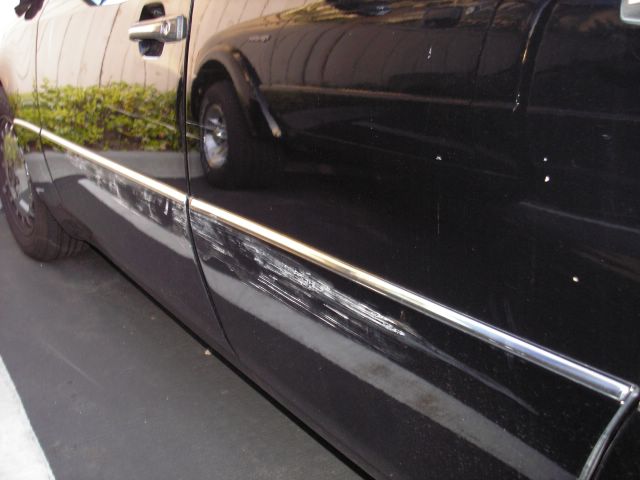
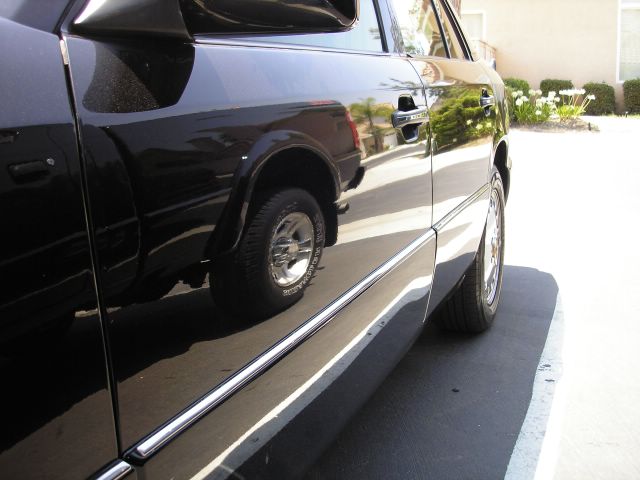


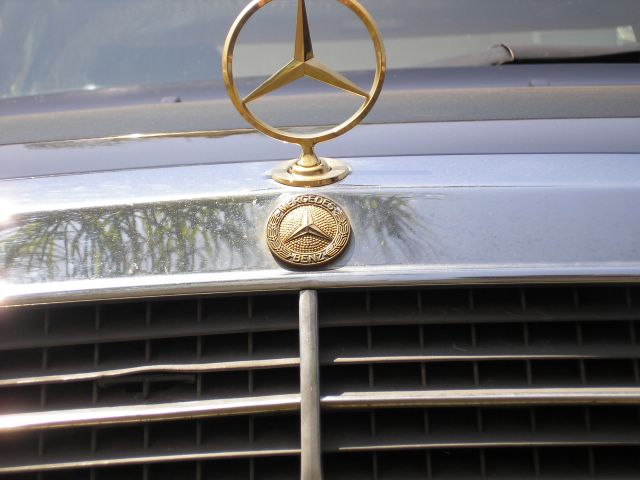
Saturday, July 16, 2005
Thursday, July 14, 2005
Doe-Rae-Mi
Beware leechers of wireless networks!
On another note...
I saw something that made me angry. It was a Toyota Prius with the following bumper sticker:
Tax the Rich
SUV=WMD
Aside from the non-sequitur, and the obvious problem with equating two abbreviations, it just seemed superfluous to have a bumper sticker such as this on a Prius. By driving a Toyota Prius, you are already making a statement about your political philosophy: who would want to drive an expensive, hideous, and powerless car other than those who really want to stick it to their SUV driving peers? And why would someone want to "Tax the Rich" when he spent an inordinate amount of money on his Prius? It boggles my mind.
On yet another note....
Here's the first draft of Mike's logo for the graphics/clothing company he wants to start; he wants to call it "Stellas."

I wanted to add something about language and pronunciation, but it's late. So all you get are my three notes, which, if turned into chords and sped up, might become a horrible punk song.
On another note...
I saw something that made me angry. It was a Toyota Prius with the following bumper sticker:
Tax the Rich
SUV=WMD
Aside from the non-sequitur, and the obvious problem with equating two abbreviations, it just seemed superfluous to have a bumper sticker such as this on a Prius. By driving a Toyota Prius, you are already making a statement about your political philosophy: who would want to drive an expensive, hideous, and powerless car other than those who really want to stick it to their SUV driving peers? And why would someone want to "Tax the Rich" when he spent an inordinate amount of money on his Prius? It boggles my mind.
On yet another note....
Here's the first draft of Mike's logo for the graphics/clothing company he wants to start; he wants to call it "Stellas."

I wanted to add something about language and pronunciation, but it's late. So all you get are my three notes, which, if turned into chords and sped up, might become a horrible punk song.
Sunday, July 10, 2005
Creatively Non-Creative
I have not been very good--or creative--these past couple of days. Maybe the past couple of weeks. My posts evince this. Fortunately, one of my good friends sent me something via email that will serve as a post.
"I believe in adventure. I believe in backpacks instead of rolling bags despite the bruised hips and shoulders. I belive in hostels and internet cafes run by German-Indian men with bad b.o. I believe that one can live off of salami, cheese and bread and drink only water for weeks on end. I believe in the kindness of the Irish, the hospitality of the Swiss, the French, the Canadian, the Dutch, the Belgian, the English and the German. I believe in beautiful European children. I believe in falling in love over and over again with the world around me. I believe in spending long train rides with my MP3 player watching the world go by or sleeping on someone's shoulder whom I met three days earlier. I believe in stuffy noses, headaches, sore backs, tired feet, cuts, mystery bruises, sprained ankles and blisters. But I also believe that those things are nothing that a hot shower and a nap can't fix. I believe in Guinness, rosti, chocolate, waffles, crepes, anything with Nutella, coffee and bread for breakfast, and ice cream. I believe in love at first sight and kissing under the Eiffel Tower like a 1960's French movie. I believe in meeting someone and changing your plans for them. I believe that 5 weeks on your own can make you realize that everything you thought you wanted is not at all what you want. I believe in wearing the same outfit for three days in a row and the same jeans for three weeks. I believe in giant bags of Haribo gummy bears. I belive in being strong, independent, outgoing, kind, brave and lovely. I believe in deciphering strange keyboards. I believe in mountains, beaches, cities, museums, cafes, bars, clubs, pubs and parks. Ultimately, I believe in the right to travel on your own and the courage to do it. "
-Berlin, 2005
Meredith Sherwin
International Nomad
And if that doesn't get your mo-jo going, then I guess some of the links I added might.
The pact, however, is still in tact. So, by my word, I must produce something creative, complete, and good by 1 August 2005. And, as far as I know, pictures will still be coming soon, maybe within the next week or so.
"I believe in adventure. I believe in backpacks instead of rolling bags despite the bruised hips and shoulders. I belive in hostels and internet cafes run by German-Indian men with bad b.o. I believe that one can live off of salami, cheese and bread and drink only water for weeks on end. I believe in the kindness of the Irish, the hospitality of the Swiss, the French, the Canadian, the Dutch, the Belgian, the English and the German. I believe in beautiful European children. I believe in falling in love over and over again with the world around me. I believe in spending long train rides with my MP3 player watching the world go by or sleeping on someone's shoulder whom I met three days earlier. I believe in stuffy noses, headaches, sore backs, tired feet, cuts, mystery bruises, sprained ankles and blisters. But I also believe that those things are nothing that a hot shower and a nap can't fix. I believe in Guinness, rosti, chocolate, waffles, crepes, anything with Nutella, coffee and bread for breakfast, and ice cream. I believe in love at first sight and kissing under the Eiffel Tower like a 1960's French movie. I believe in meeting someone and changing your plans for them. I believe that 5 weeks on your own can make you realize that everything you thought you wanted is not at all what you want. I believe in wearing the same outfit for three days in a row and the same jeans for three weeks. I believe in giant bags of Haribo gummy bears. I belive in being strong, independent, outgoing, kind, brave and lovely. I believe in deciphering strange keyboards. I believe in mountains, beaches, cities, museums, cafes, bars, clubs, pubs and parks. Ultimately, I believe in the right to travel on your own and the courage to do it. "
-Berlin, 2005
Meredith Sherwin
International Nomad
And if that doesn't get your mo-jo going, then I guess some of the links I added might.
The pact, however, is still in tact. So, by my word, I must produce something creative, complete, and good by 1 August 2005. And, as far as I know, pictures will still be coming soon, maybe within the next week or so.
Wednesday, July 06, 2005
Happy Birthday, Suleyman
Hung up here on a web of comfort
Taking off with nowhere to go
Standing tall with but your new cloak armor
Making out like it's all been done
It's harder than it seems
You slip but never fall
They'll take you, when you wont come back to me
Tearing down what we built up so well
Layin' low as you came my way
Look alive with your head on backwards, goin off when there's nothin wrong
It's only in your dreams, but it felt like it was real
They'll take you, when you won't come back to me
Hang loose, my friend dont walk away from me, because i really think you're cool
Is it worth turning back despite these open hands?
You're tearing me apart.
They'll take you, when you won't come back to me
(you need to find yourself).
~Jimmy Eat World
Seventeen
(Ironically--fittingly--that is how old my brother is turning today.)
Taking off with nowhere to go
Standing tall with but your new cloak armor
Making out like it's all been done
It's harder than it seems
You slip but never fall
They'll take you, when you wont come back to me
Tearing down what we built up so well
Layin' low as you came my way
Look alive with your head on backwards, goin off when there's nothin wrong
It's only in your dreams, but it felt like it was real
They'll take you, when you won't come back to me
Hang loose, my friend dont walk away from me, because i really think you're cool
Is it worth turning back despite these open hands?
You're tearing me apart.
They'll take you, when you won't come back to me
(you need to find yourself).
~Jimmy Eat World
Seventeen
(Ironically--fittingly--that is how old my brother is turning today.)
Monday, July 04, 2005
Independence Day
future butterfly gonna spend the day higher than high
you'll be beautiful confusion
ooh once i was you
i saw you caught between all the people out making the scene
and a bright ideal tomorrow
ooh, don't go too far
stay who you are
everybody knows
everybody knows
everybody knows
you only live a day
but it's brilliant anyway
i saw you at a perfect place
it's gonna happen soon but not today
so go to sleep and make the change
i'll meet you here tomorrow
independence day
independence day
independence day
~Elliott Smith
you'll be beautiful confusion
ooh once i was you
i saw you caught between all the people out making the scene
and a bright ideal tomorrow
ooh, don't go too far
stay who you are
everybody knows
everybody knows
everybody knows
you only live a day
but it's brilliant anyway
i saw you at a perfect place
it's gonna happen soon but not today
so go to sleep and make the change
i'll meet you here tomorrow
independence day
independence day
independence day
~Elliott Smith
Sunday, July 03, 2005
The Nymph
"Kit read the title from the ill-ordered manuscript Raleigh took from his ill-ordered table: The Transformation of the King of Triniidado's two daughters, Madam Panacea and the Nymph Tobacco. He said:
-- This last name, which I do not know, seems not a feminine name.
-- Well, she may at first strike you with a masculine buffet, but thereafter she is gentler than love. And all that Hariot says is true. You know Hariot? No, but you will. There are many that you are yet to know. Are you willing to yield to the nymph? You look doubtful. Well, I will demonstrate.
And Raleigh opened up a cabinet under his window. It held rows of long tubes, as he showed, curved gracefully and ending in a shallow bowl. Clay, he said, as in Virginia, but here I have one especially fashioned in silver. It glinted in the firelight. And here is the nymph. From a drawer of the cabinet he took a fair pinch of a herb, strands of yellow, brown, black, and stuffed this in the silver bowl. Smell, he said, proffering. Kit sniffed. Heady, outlandish, altogether new. And now, Raleigh said, her enlivening and curative spirit riseth in smoke. He took from a pot a spill and enflamed it at his fire. Then he inflamed the herb, the herb smouldered, he drew in smoke and, in a blue jet, emitted it. The aroma sidled towards Kit; Kit coughed gently. Aye, you will cough more when you kiss her. But the cough will be in the manner of a cleansing, a disgorgement of the grosser humours, you may even vomit them up. There is a bowl beneath that table. And then no more coughing, only the bliss of inhalation. Curse it, my talking has doused her. And he refired his spill and relighted. The blue jet bore his words: Will you try?"
~ Anthony Burgess
A Dead Man in Deptford (pp. 126-7)
-- This last name, which I do not know, seems not a feminine name.
-- Well, she may at first strike you with a masculine buffet, but thereafter she is gentler than love. And all that Hariot says is true. You know Hariot? No, but you will. There are many that you are yet to know. Are you willing to yield to the nymph? You look doubtful. Well, I will demonstrate.
And Raleigh opened up a cabinet under his window. It held rows of long tubes, as he showed, curved gracefully and ending in a shallow bowl. Clay, he said, as in Virginia, but here I have one especially fashioned in silver. It glinted in the firelight. And here is the nymph. From a drawer of the cabinet he took a fair pinch of a herb, strands of yellow, brown, black, and stuffed this in the silver bowl. Smell, he said, proffering. Kit sniffed. Heady, outlandish, altogether new. And now, Raleigh said, her enlivening and curative spirit riseth in smoke. He took from a pot a spill and enflamed it at his fire. Then he inflamed the herb, the herb smouldered, he drew in smoke and, in a blue jet, emitted it. The aroma sidled towards Kit; Kit coughed gently. Aye, you will cough more when you kiss her. But the cough will be in the manner of a cleansing, a disgorgement of the grosser humours, you may even vomit them up. There is a bowl beneath that table. And then no more coughing, only the bliss of inhalation. Curse it, my talking has doused her. And he refired his spill and relighted. The blue jet bore his words: Will you try?"
~ Anthony Burgess
A Dead Man in Deptford (pp. 126-7)
Monday, June 27, 2005
When Did France Become a Third World Nation?
Monday, June 27, 2005 (SF Chronicle)
Arab rocker Rachid Taha's music fueled by politics, punk attitude and -- what else? -- romance
Jonathan Curiel, Chronicle Staff Writer
He's an Arab punk rocker. He's a provocateur who criticizes Arab governments. He's a romantic who sprinkles conversations with sex references. Oh, yeah -- he's also a budding screenwriter and novelist, not to mention a jokester who says his success with singing is almost a fluke.
"When you come from the Third World, and you're a kid growing up there, your dream is to become a doctor or an engineer," says Rachid Taha, who was born and raised in Algeria. "The working class never dreams of having a musical career; the upper class dreams of that."
Taha is speaking on the phone from Paris, where he lives when he's not performing around the world. Tuesday night, Taha will be in San Francisco on his latest tour, which coincides with the release of "Tekitoi," a new album that's vintage Taha. There's an ode to his Arab roots (the classic song "Ya Rayah," written by Abderrahmane Amrani); there's a hard-sounding riff on the state of Arab politicians ("Safi," which includes the lines,"Our culture in not democratic . . . the rulers have neutered the people"); there's an atmospheric collaboration with a high-profile fan of Taha's (Brian Eno, who orchestrates their song "Dima"); and there's a reworking of a Western standard (the Clash's "Rock the Casbah"). Taha's "Rock El Casbah" features an Egyptian string ensemble, Moroccan flute, Arabic percussion and an up-tempo, playful approach that makes it seem Joe Strummer's work (which is about music fans opposing an oppressive king) was written just for Taha.
Taha, who is 46, has liked punk music since he was a teenager in France. He moved there with his parents, who were strict Muslims, when he was 10. Taha's father worked in a factory -- a job Taha also took when he was young, though at night he spun music as a DJ in his own club. In those days, Taha and other Algerian immigrants living in Lyon were generally prohibited from the regular night spots -- a level of discrimination that made Taha angry and set up his identification with the punk music of the Clash and other groups. Taha has been influenced by a smorgasbord of other musicians, including Elvis Presley; Led Zepplin and Robert Plant; Oum Kalthoum, Egypt's greatest classical singer; and Bollywood groups that perform the big-budget love songs of India's most popular films. Still, it's rock music that Taha has internalized the most. He once told an interviewer, "For me, (my) music is rock 'n' roll, colored by what's inside me -- and what's inside me is I'm European, Arab and Muslim."
Taha, who's released a series of critically acclaimed albums, sings in French and Arabic. Onstage, he likes to wear leather pants and shake hishead and longish dark hair into a frenzy like the punk rockers he idolized. Taha is also known to grab himself during songs in a way that accentuates his feeling for a particular lyric. With a voice that's throaty and resonant, and a manner that mixes humor and rebelliousness, Taha has managed to draw large numbers of fans from disparate countries, including Mexico and Russia. Last month, Taha performed with Eno in Moscow and St. Petersburg. Typical of Taha's approach, he invited audience members onstage to dance with him, which they did.
Taha's parents have only seen him once in concert, which is deliberate: He doesn't like them attending his shows. "My parents seeing me onstage would be almost like they were seeing me make love to a woman," he says through an interpreter. "If Elvis Presley and Bob Dylan had their parents in the room, they'd (feel) the same way."
Besides being critical of Arab leaders, Taha points an accusing finger at President Bush, whom he calls a fundamentalist for his role in the Iraq war. Politics, though, is not always on Taha's mind. Romance is a preoccupation, and so the screenplay he's working on has "a love theme," he says, without elaborating. Taha, who has a 20-year-old son from a previous relationship, says one of his biggest thrills in life is "meeting new faces." Years ago, he'd wanted to be a journalist.
"Now," he says, "my message is through music."
Arab rocker Rachid Taha's music fueled by politics, punk attitude and -- what else? -- romance
Jonathan Curiel, Chronicle Staff Writer
He's an Arab punk rocker. He's a provocateur who criticizes Arab governments. He's a romantic who sprinkles conversations with sex references. Oh, yeah -- he's also a budding screenwriter and novelist, not to mention a jokester who says his success with singing is almost a fluke.
"When you come from the Third World, and you're a kid growing up there, your dream is to become a doctor or an engineer," says Rachid Taha, who was born and raised in Algeria. "The working class never dreams of having a musical career; the upper class dreams of that."
Taha is speaking on the phone from Paris, where he lives when he's not performing around the world. Tuesday night, Taha will be in San Francisco on his latest tour, which coincides with the release of "Tekitoi," a new album that's vintage Taha. There's an ode to his Arab roots (the classic song "Ya Rayah," written by Abderrahmane Amrani); there's a hard-sounding riff on the state of Arab politicians ("Safi," which includes the lines,"Our culture in not democratic . . . the rulers have neutered the people"); there's an atmospheric collaboration with a high-profile fan of Taha's (Brian Eno, who orchestrates their song "Dima"); and there's a reworking of a Western standard (the Clash's "Rock the Casbah"). Taha's "Rock El Casbah" features an Egyptian string ensemble, Moroccan flute, Arabic percussion and an up-tempo, playful approach that makes it seem Joe Strummer's work (which is about music fans opposing an oppressive king) was written just for Taha.
Taha, who is 46, has liked punk music since he was a teenager in France. He moved there with his parents, who were strict Muslims, when he was 10. Taha's father worked in a factory -- a job Taha also took when he was young, though at night he spun music as a DJ in his own club. In those days, Taha and other Algerian immigrants living in Lyon were generally prohibited from the regular night spots -- a level of discrimination that made Taha angry and set up his identification with the punk music of the Clash and other groups. Taha has been influenced by a smorgasbord of other musicians, including Elvis Presley; Led Zepplin and Robert Plant; Oum Kalthoum, Egypt's greatest classical singer; and Bollywood groups that perform the big-budget love songs of India's most popular films. Still, it's rock music that Taha has internalized the most. He once told an interviewer, "For me, (my) music is rock 'n' roll, colored by what's inside me -- and what's inside me is I'm European, Arab and Muslim."
Taha, who's released a series of critically acclaimed albums, sings in French and Arabic. Onstage, he likes to wear leather pants and shake hishead and longish dark hair into a frenzy like the punk rockers he idolized. Taha is also known to grab himself during songs in a way that accentuates his feeling for a particular lyric. With a voice that's throaty and resonant, and a manner that mixes humor and rebelliousness, Taha has managed to draw large numbers of fans from disparate countries, including Mexico and Russia. Last month, Taha performed with Eno in Moscow and St. Petersburg. Typical of Taha's approach, he invited audience members onstage to dance with him, which they did.
Taha's parents have only seen him once in concert, which is deliberate: He doesn't like them attending his shows. "My parents seeing me onstage would be almost like they were seeing me make love to a woman," he says through an interpreter. "If Elvis Presley and Bob Dylan had their parents in the room, they'd (feel) the same way."
Besides being critical of Arab leaders, Taha points an accusing finger at President Bush, whom he calls a fundamentalist for his role in the Iraq war. Politics, though, is not always on Taha's mind. Romance is a preoccupation, and so the screenplay he's working on has "a love theme," he says, without elaborating. Taha, who has a 20-year-old son from a previous relationship, says one of his biggest thrills in life is "meeting new faces." Years ago, he'd wanted to be a journalist.
"Now," he says, "my message is through music."
Saturday, June 25, 2005
Pact Like Sardines?
I tried and tried to think of something cogent to say about the House passing the bill against flag burning. It turns out Rothbard has said all that needs to be said on the issue.
Nathan and I have made a pact to get complete stories done by August first. It seems like a long time from now, but I should get cracking. (I have not completed a short story, or any story, since about this time last year.) If it's any good, it might make its way onto this blog. Most likely, A Dead Man in Deptford will be quoted, and I will try to palm it off as my own writing. I'm not too concerned, the difference between Burgess and me is akin to the difference between the sun and the moon.
I'll also post some pictures in about three weeks.
Nathan and I have made a pact to get complete stories done by August first. It seems like a long time from now, but I should get cracking. (I have not completed a short story, or any story, since about this time last year.) If it's any good, it might make its way onto this blog. Most likely, A Dead Man in Deptford will be quoted, and I will try to palm it off as my own writing. I'm not too concerned, the difference between Burgess and me is akin to the difference between the sun and the moon.
I'll also post some pictures in about three weeks.
Thursday, June 23, 2005
Summer Theologica
Since it's all the rage to take internet quizzes, and since internet quizzes accurately reflect who you are and your characteristics, I decided to take one. It's a theological one, a Christian Theologian one. I tried to answer the questions to the best of my ability, given I am not a Christian (we'll leave Russell's apology out of this post). It turns out, as the bar graph will show, that I'm pretty much John Calvin. I'm glad that, unlike John, I am not 100% of any theologian. It might cause me, given the gravity of internet quizzes, to question my beliefs.
So, these are the results (I have not even heard of half the theologians listed!):
So, these are the results (I have not even heard of half the theologians listed!):
 | You scored as John Calvin. Much of what is now called Calvinism had more to do with his followers than Calvin himself, and so you may or may not be committed to TULIP, though God's sovereignty is all important.
Which theologian are you? created with QuizFarm.com |
Sunday, June 19, 2005
Con-Grads.
Yes, today is Father's Day. Yes, I took these photographs a week ago. Yes, practically everyone has graduated already. Yes, I know.
The Asian Sensation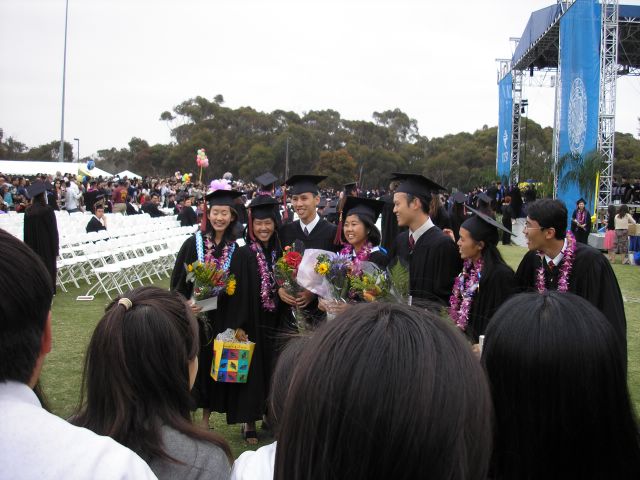
UCSD's Finest
What Four Hours of Happiness Looks Like
Congratulations to everyone that has graduated from some institution, and happy Father's Day.
Saturday, June 18, 2005
The Party Never Stops
Back in October or November of 2004, my mother made the mistake of donating money to the Democratic Party. Try as I might, I could not convince my mother to not give the money to them, no matter what rhetorical strategy or logical argument I presented. It's not that my mother is affiliated with any political party, she doesn't even like the Democratic Party, but she gave the money out of principle (the principle of "They are asking, and I have the money"). I tried to tell her that "they" are not some beggars, or some people in dire need, they aren't even an organization that would help anyone out; "they" are a machine that needed fuel in the form of green backs. I don't think there is any moral principle that states that we have to give money to machines. She gave the money anyway.
Since then, it has been one annoyance after another. Junk mail from the Party continued to arrive at our home. They asked for more money. They have called with surveys. They hide in our back yard and monitor us while we sleep--well, they don't do that, but they might as well. It seems the Democratic Party is poorer than I was while in school. They even sold my mother's name and address to the ACLU, because, about three or four days ago, we received a letter from the American Civil Liberties Union, along with a survey, along with a plea for money. Fortunately, my mother is not going to give to the ACLU. She says she doesn't have the money.
I didn't immediately toss the letter from "Anthony D. Romero" (Executive Director--he's so important, his title is redundant!), partly because I wanted to see why the ACLU sent a four page letter to us. I read through it, and of course it was repetitive and incoherent, but the crux of the letter was about freedom, or "civil liberties." Mr. Romero does not attempt to define freedom or civil liberties, but he believes that we are for them: "Like many others, you may be feeling that civil liberties in our country are going to get worse before they get better. But I'm betting that you are also like the thousands of people who are raising their voices and standing up for the basic American values of justice and liberty for all." I think Mr. Romero just lost some money.
Later on in the letter, Mr. Romero tells us that, "Through all the ups and downs of political debates, we must never lose sight of the fact that those who stand in opposition to freedom are standing on the wrong side of history," which immediately brought to mind a part of the "Team America" theme song..."Freedom is the only way." And of course, it's blatantly obvious that any neoconservative would respond by saying whatever they are doing is supporting freedom, and that the ACLU, being opposed to whatever the neocons are doing, is on the "wrong side of history" (whatever that means).
It's also interesting that the ACLU is against big government when it's mostly Republican: "George Bush has four more years to pursue a double-edged agenda that uses the war on terror to vastly expand unchecked government powers, while working hand-in-hand with religious right extremists to undermine religious liberty, suppress free speech and dissent, undo a woman's right to choose and deny equal rights to lesbians and gay men." Mr. Romero probably would not have said anything about "unchecked government powers" with a Democrat in office. The ACLU was also for civil rights legislation back in the '60s. They fed the beast, and now they are unhappy that it isn't doing what they say.
I guess my mother will just have to wait until a Democrat is elected president in 2008, so that we can stop getting junk mail.
Since then, it has been one annoyance after another. Junk mail from the Party continued to arrive at our home. They asked for more money. They have called with surveys. They hide in our back yard and monitor us while we sleep--well, they don't do that, but they might as well. It seems the Democratic Party is poorer than I was while in school. They even sold my mother's name and address to the ACLU, because, about three or four days ago, we received a letter from the American Civil Liberties Union, along with a survey, along with a plea for money. Fortunately, my mother is not going to give to the ACLU. She says she doesn't have the money.
I didn't immediately toss the letter from "Anthony D. Romero" (Executive Director--he's so important, his title is redundant!), partly because I wanted to see why the ACLU sent a four page letter to us. I read through it, and of course it was repetitive and incoherent, but the crux of the letter was about freedom, or "civil liberties." Mr. Romero does not attempt to define freedom or civil liberties, but he believes that we are for them: "Like many others, you may be feeling that civil liberties in our country are going to get worse before they get better. But I'm betting that you are also like the thousands of people who are raising their voices and standing up for the basic American values of justice and liberty for all." I think Mr. Romero just lost some money.
Later on in the letter, Mr. Romero tells us that, "Through all the ups and downs of political debates, we must never lose sight of the fact that those who stand in opposition to freedom are standing on the wrong side of history," which immediately brought to mind a part of the "Team America" theme song..."Freedom is the only way." And of course, it's blatantly obvious that any neoconservative would respond by saying whatever they are doing is supporting freedom, and that the ACLU, being opposed to whatever the neocons are doing, is on the "wrong side of history" (whatever that means).
It's also interesting that the ACLU is against big government when it's mostly Republican: "George Bush has four more years to pursue a double-edged agenda that uses the war on terror to vastly expand unchecked government powers, while working hand-in-hand with religious right extremists to undermine religious liberty, suppress free speech and dissent, undo a woman's right to choose and deny equal rights to lesbians and gay men." Mr. Romero probably would not have said anything about "unchecked government powers" with a Democrat in office. The ACLU was also for civil rights legislation back in the '60s. They fed the beast, and now they are unhappy that it isn't doing what they say.
I guess my mother will just have to wait until a Democrat is elected president in 2008, so that we can stop getting junk mail.
Wednesday, June 15, 2005
How to Be Alone for the Rest of Your Life
- Be the nicest person you can possibly be.
- Notice when girls get haircuts, highlights, or new shoes.
- Compliment them on their haircuts, highlights, or new shoes.
- Continue to be intimidated by pretty girls.
- When you speak, blurt out something idiotic, incoherent, and meaningless.
- Be encouraging.
- Live with your parents.
- Stare at pretty girls until you realize they're looking at you, then quickly turn away as if you were not looking at them.
- Listen to every one of your instincts.
- Work in a law office that specializes in divorce.
- Don't believe in love.
- Have an obssession with The Simpsons that borders on addiction, and quote The Simpsons at inopportune moments.
- Ignore most of your friends.
- No alarms and no surprises, please.
- Get ticked off at the most trivial things; proceed to pretend that you're not angry.
- Have no ambition whatsoever.
- Act oblivious in most situations.
- Misinterpret everything.
- Get the nerve to do something, and then don't do it.
- Hold views that would make Pat Buchanan blush; agree with everyone.
- Go to bed at 10:00 post meridian every night.
- Use the term "post meridian" instead of "p.m."
- Keep telling yourself, "she's got to have a boyfriend."
- She does have a boyfriend. (It's not you.)
- Listen to Elliott Smith.
- Make sure to NEVER let her know how you feel.
- Have a useless blog that only one person reads.
- Follow every item on this list.
- Notice when girls get haircuts, highlights, or new shoes.
- Compliment them on their haircuts, highlights, or new shoes.
- Continue to be intimidated by pretty girls.
- When you speak, blurt out something idiotic, incoherent, and meaningless.
- Be encouraging.
- Live with your parents.
- Stare at pretty girls until you realize they're looking at you, then quickly turn away as if you were not looking at them.
- Listen to every one of your instincts.
- Work in a law office that specializes in divorce.
- Don't believe in love.
- Have an obssession with The Simpsons that borders on addiction, and quote The Simpsons at inopportune moments.
- Ignore most of your friends.
- No alarms and no surprises, please.
- Get ticked off at the most trivial things; proceed to pretend that you're not angry.
- Have no ambition whatsoever.
- Act oblivious in most situations.
- Misinterpret everything.
- Get the nerve to do something, and then don't do it.
- Hold views that would make Pat Buchanan blush; agree with everyone.
- Go to bed at 10:00 post meridian every night.
- Use the term "post meridian" instead of "p.m."
- Keep telling yourself, "she's got to have a boyfriend."
- She does have a boyfriend. (It's not you.)
- Listen to Elliott Smith.
- Make sure to NEVER let her know how you feel.
- Have a useless blog that only one person reads.
- Follow every item on this list.
Sunday, June 12, 2005
Middle English "galaunt," from Old French "galant," present participle of "galer": to rejoice, of Germanic origin. See wel-1 in Indo-European Roots.
Single File

The Other Side
Triple (Flip) Diamond
Dashboard Confessional
Face to Face
Friday, June 10, 2005
Sunday, June 05, 2005
Because I Have Nothing New to Say
I've lost more sleep than I can say
And blurred the lines between the days
Pour myself another cup
Put one out, light another up
My mind's stopped making any sense
I've lost track of the present tense
Don't wanna leave, don't wanna stay
I'd kill to bring back yesterday
Folded up and left for dead
The things I wish I would've said
The times I should've turned to run
But the damage was already done
And I dug myself a deeper hole
Raked myself over the coals
Reason brings redemption
But redemption won't be mine
Suppressed my frustration
But it returned
Lost in the translation
I'm not concerned
Smoke 'em if you got 'em
'Cuz we're never gonna learn
And dance upon the ashes of this world
Got hours more and miles to go
I feel the clock begin to slow
Play the hand that I was dealt
By the enemy that is myself
If I don't get out from under this
I might never know what I fucking missed
I'm at the breaking point
But don't know where to draw the line
I'm ticking like a fucking bomb
Had the best of intentions
My resolve outlasts my apprehensions
Won't be the first time
Not gonna be the last
I looked ahead through bleary eyes
And wondered what was left
Wondered will I pass the test
I've lost myself and found myself
And lost it all again
It comes down to me in the end
The more I know
The less I comprehend
It comes down to me in the end.
~Dillinger Four
SELLTHEHOUSESELLTHECARSELLTHEKIDSFINDSOMEONEELSE
FORGETITI'MNEVERCOMINGBACKFORGETIT
And blurred the lines between the days
Pour myself another cup
Put one out, light another up
My mind's stopped making any sense
I've lost track of the present tense
Don't wanna leave, don't wanna stay
I'd kill to bring back yesterday
Folded up and left for dead
The things I wish I would've said
The times I should've turned to run
But the damage was already done
And I dug myself a deeper hole
Raked myself over the coals
Reason brings redemption
But redemption won't be mine
Suppressed my frustration
But it returned
Lost in the translation
I'm not concerned
Smoke 'em if you got 'em
'Cuz we're never gonna learn
And dance upon the ashes of this world
Got hours more and miles to go
I feel the clock begin to slow
Play the hand that I was dealt
By the enemy that is myself
If I don't get out from under this
I might never know what I fucking missed
I'm at the breaking point
But don't know where to draw the line
I'm ticking like a fucking bomb
Had the best of intentions
My resolve outlasts my apprehensions
Won't be the first time
Not gonna be the last
I looked ahead through bleary eyes
And wondered what was left
Wondered will I pass the test
I've lost myself and found myself
And lost it all again
It comes down to me in the end
The more I know
The less I comprehend
It comes down to me in the end.
~Dillinger Four
SELLTHEHOUSESELLTHECARSELLTHEKIDSFINDSOMEONEELSE
FORGETITI'MNEVERCOMINGBACKFORGETIT
Thursday, June 02, 2005
Something to Live For
"[Bertrand] Russell's analytic approach had its origins in numbers; mathematics was his first love. In his autobiography he recalled his miserable adolescence and a footpath down which he would wander on England's south coast. 'I used to go there alone to watch the sunset and contemplate suicide. I did not, however, commit suicide, because I wished to know more about mathematics.'"
~Wittgenstein's Poker p. 222
~Wittgenstein's Poker p. 222
Wednesday, June 01, 2005
Figure 8
Saint Ide's Heaven


I'm a Junkyard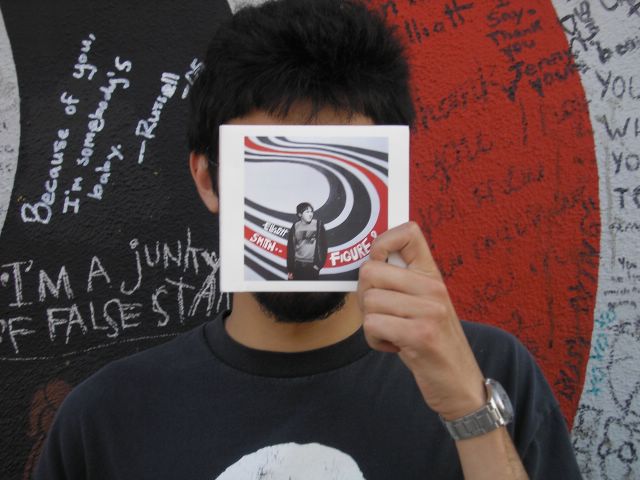
Alameda Closed
They Took Your Life Apart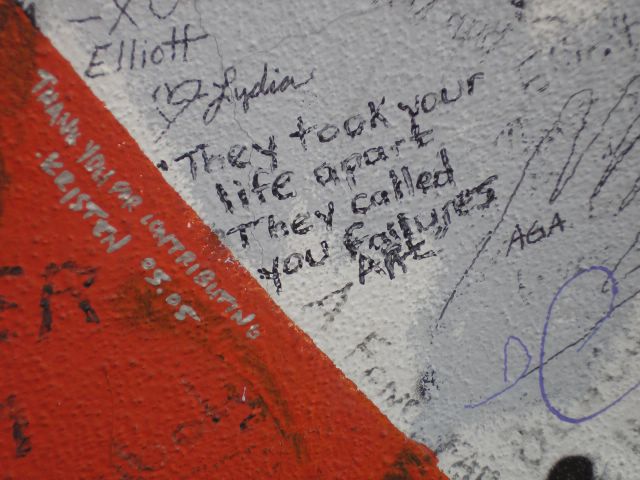
The Elliot Smith Memorial
Monday, May 16, 2005
Back to the Rock
(C'mon Hollywood!)
No more waiting on them
As you rise inside new rooms
It's official, you've gone,
You could live for no one
Else man, the guilt must be huge
There's no pain in failure
You succeed at being mine yeah,
Old friend, see you there
I will be proud from afar
I can paint a picture in a moment
Of memories, and there are many left
I am extradited
Uninvited
(Yeah, C'mon!)
It's just another Saturday
Take a step to freedom
You and her loathing
This cruel world
Take a breath of shelter
Then exhale trust and allegiance
Liberate yourself from hell
It's just another Saturday
It's just another Saturday
(Let's Go!
C'mon Dude!
C'mon!
There you go fucker!)
(Goddamn Hollywood, Thanks very much.)
~Lagwagon, May 16th
(Taken from Live in a Dive)
No more waiting on them
As you rise inside new rooms
It's official, you've gone,
You could live for no one
Else man, the guilt must be huge
There's no pain in failure
You succeed at being mine yeah,
Old friend, see you there
I will be proud from afar
I can paint a picture in a moment
Of memories, and there are many left
I am extradited
Uninvited
(Yeah, C'mon!)
It's just another Saturday
Take a step to freedom
You and her loathing
This cruel world
Take a breath of shelter
Then exhale trust and allegiance
Liberate yourself from hell
It's just another Saturday
It's just another Saturday
(Let's Go!
C'mon Dude!
C'mon!
There you go fucker!)
(Goddamn Hollywood, Thanks very much.)
~Lagwagon, May 16th
(Taken from Live in a Dive)
Saturday, May 14, 2005
GRE Practice
Prompt:
The concept of free will is a fallacy. Many actions are not the product of choice and thus people should not be held responsible for them.
My response:
The above argument makes several bald assertions concerning free will and responsibility. It basically states that, since there is no free will, people cannot be held responsible for their actions (because they are merely "pawns" in a predestined world, one would guess). The statement assumes that if there is no free will, then there is no will at all, and only with will can one claim responsibility. The statement does make a good point against the argument for free will, because it states that, "[m]any actions are not the product of choice..." which is true. But to conclude from that reason that people cannot be held responsible for their actions is a fallacy in itself.
It is true that many actions are not the product of choice, and the situations we encounter are sometimes beyond our control. Take, for instance, the recent tsunami disaster in South East Asia. I doubt anyone willed such an event to occur, and the aftermath--the lives lost, the destruction, the disease, and the famine--certainly was beyond any person's control. Even on an individual scale, there are actions that are performed by people that they do not control. There are reflexes that just occur when stimulated, there is the need to evacuate one's bowels, gas, and hunger. Even breathing is not necessarily controlled by will. From the grand-scale tsunami to the individual breath, there are a wide array of actions that are not a product of choice, which would make a case against free will. It does not follow from this that man is not responsible for his actions.
Man is responsible for his actions, because, although he might not have free will, he does have a will. And while this will is bonded with destiny, it does not exclude man from taking responsibility for his actions. Returnng to the tsunami example of the previous paragraph, once the tsunami had ravaged South East Asia, people's reactions to the tsunami were governed by their wills. Whether one chose to help reconstruct ravaged homes, donate money, or completely ignore the problem, one needed a will to react, and hence one must take responsibility for the action. Even on the individual level, while being hungry, breathing, and evacuating one's bowels are things that the individual does not necessarily control, the will can choose whether one eats, whether one continues breathing, or when one needs to relieve oneself. Hence every action, whether chosen are not, can be taken into account because man does have a will, even though it is not a free will.
The argument above makes a good point about free will--it is a fallacy. There are so many actions that we cannot control. However, the argument automatically assumes that if there is no free will, then there is no will at all, and hence, no responsibility. This is not true. Man does have a will to choose how to react to situations that are beyond his control, and hence he must be held responsible for how he reacts. While he may not have a free will, it does not mean that he has no will at all.
*****
Something tells me I'm going to do very poorly on the GRE.
The concept of free will is a fallacy. Many actions are not the product of choice and thus people should not be held responsible for them.
My response:
The above argument makes several bald assertions concerning free will and responsibility. It basically states that, since there is no free will, people cannot be held responsible for their actions (because they are merely "pawns" in a predestined world, one would guess). The statement assumes that if there is no free will, then there is no will at all, and only with will can one claim responsibility. The statement does make a good point against the argument for free will, because it states that, "[m]any actions are not the product of choice..." which is true. But to conclude from that reason that people cannot be held responsible for their actions is a fallacy in itself.
It is true that many actions are not the product of choice, and the situations we encounter are sometimes beyond our control. Take, for instance, the recent tsunami disaster in South East Asia. I doubt anyone willed such an event to occur, and the aftermath--the lives lost, the destruction, the disease, and the famine--certainly was beyond any person's control. Even on an individual scale, there are actions that are performed by people that they do not control. There are reflexes that just occur when stimulated, there is the need to evacuate one's bowels, gas, and hunger. Even breathing is not necessarily controlled by will. From the grand-scale tsunami to the individual breath, there are a wide array of actions that are not a product of choice, which would make a case against free will. It does not follow from this that man is not responsible for his actions.
Man is responsible for his actions, because, although he might not have free will, he does have a will. And while this will is bonded with destiny, it does not exclude man from taking responsibility for his actions. Returnng to the tsunami example of the previous paragraph, once the tsunami had ravaged South East Asia, people's reactions to the tsunami were governed by their wills. Whether one chose to help reconstruct ravaged homes, donate money, or completely ignore the problem, one needed a will to react, and hence one must take responsibility for the action. Even on the individual level, while being hungry, breathing, and evacuating one's bowels are things that the individual does not necessarily control, the will can choose whether one eats, whether one continues breathing, or when one needs to relieve oneself. Hence every action, whether chosen are not, can be taken into account because man does have a will, even though it is not a free will.
The argument above makes a good point about free will--it is a fallacy. There are so many actions that we cannot control. However, the argument automatically assumes that if there is no free will, then there is no will at all, and hence, no responsibility. This is not true. Man does have a will to choose how to react to situations that are beyond his control, and hence he must be held responsible for how he reacts. While he may not have a free will, it does not mean that he has no will at all.
*****
Something tells me I'm going to do very poorly on the GRE.
Friday, May 13, 2005
Failure's Art
They had Little Billy tied up in the basement when the doorbell rang.
"It’s them!"
"I can’t go South again–not again!"
"We have to do something!"
"I’m not going South, you hear me?"
At this point, Little Billy began to cry–a low moaning crescendo becoming a cacophonous howl.
"They’re going to hear him, what are we going to do?"
"I can’t go South, I can’t. I just can’t go South."
Tears began to form around the corner of Sid’s eyes; his long eyelashes seemed even longer when wet. Pacey continued to pace around the foyer, mumbling.
"I just can’t. Not again. Not ever."
"Well, we sure as hell will go South if you don’t help me think of what to do with Little Billy!" Sid was not openly weeping, but the tears were coming down now, the hint of desperation not so subtle anymore. Pacey stopped. He gave an incredulous look at Sid, as if realizing for the first time the real possibility of going South. Little Billy yowled violently. The doorbell rang again.
"Why didn’t we get a muzzle for him? We could have bought a muzzle from some pet store on the way back, I’m sure it would work. We just can’t deal with them if Little Billy is free to howl and wail as if Judgment Day has come!"
"We didn’t have time to get a muzzle! We should have gotten the muzzle before we started the operation!" Pacey said, the fear of going South bleeding through his eyes as he spoke. Sid was weeping now, his frail body rattling as he buried his face in his hands. Sid looked like some skeleton resurrecting itself.
"Sid, stop it! You’re worse than a woman!" Pacey checked himself— they might hear him if he yelled too loudly. He couldn’t go South, and now Sid was going to send both of them there. Little Billy’s moans abated. The doorbell rang, followed by knocking. A thought occurred to Pacey.
"Sid, listen to me!" It was a hushed yell. In two steps, Pacey was shaking Sid’s limp shoulders.
"I have an idea but you have to listen to me!" Sid looked up at him, tears all over his face, in a sort of grimace that only people who are crying can attain.
"This is what you’re going to do. Go down to the basement and calm Little Billy down, and I’ll handle whoever is at the door [Pacey suddenly began to deny that it was them who were at the door.]. I’ll give you a signal—it’ll be something like, well, there’s nothing down in the basement—when you hear that, hide Little Billy and yourself, and then we won’t go South!"
The thought caught Pacey by surprise, and there was a moment when he suddenly felt free. He was far away from this run-down, two-story house, from Sid, from this failed "operation," and especially from Little Billy. He was on the shores of Africa, on the pinnacles of the Alps, and in the basins of Death Valley. He was everywhere and nowhere, with no responsibility and no liability. He was absolute.
The knocks on the door now, vicious and constant, brought him back. Pacey released the nodding, contorted grimace. Despite the exigent circumstances, Sid shuffled past the stairs over to the basement door. Sid looked back at Pacey, rubbed his nose and his grimace with his entire palm, rolled his neck, and then opened the door to the basement and disappeared.
"It’s them!"
"I can’t go South again–not again!"
"We have to do something!"
"I’m not going South, you hear me?"
At this point, Little Billy began to cry–a low moaning crescendo becoming a cacophonous howl.
"They’re going to hear him, what are we going to do?"
"I can’t go South, I can’t. I just can’t go South."
Tears began to form around the corner of Sid’s eyes; his long eyelashes seemed even longer when wet. Pacey continued to pace around the foyer, mumbling.
"I just can’t. Not again. Not ever."
"Well, we sure as hell will go South if you don’t help me think of what to do with Little Billy!" Sid was not openly weeping, but the tears were coming down now, the hint of desperation not so subtle anymore. Pacey stopped. He gave an incredulous look at Sid, as if realizing for the first time the real possibility of going South. Little Billy yowled violently. The doorbell rang again.
"Why didn’t we get a muzzle for him? We could have bought a muzzle from some pet store on the way back, I’m sure it would work. We just can’t deal with them if Little Billy is free to howl and wail as if Judgment Day has come!"
"We didn’t have time to get a muzzle! We should have gotten the muzzle before we started the operation!" Pacey said, the fear of going South bleeding through his eyes as he spoke. Sid was weeping now, his frail body rattling as he buried his face in his hands. Sid looked like some skeleton resurrecting itself.
"Sid, stop it! You’re worse than a woman!" Pacey checked himself— they might hear him if he yelled too loudly. He couldn’t go South, and now Sid was going to send both of them there. Little Billy’s moans abated. The doorbell rang, followed by knocking. A thought occurred to Pacey.
"Sid, listen to me!" It was a hushed yell. In two steps, Pacey was shaking Sid’s limp shoulders.
"I have an idea but you have to listen to me!" Sid looked up at him, tears all over his face, in a sort of grimace that only people who are crying can attain.
"This is what you’re going to do. Go down to the basement and calm Little Billy down, and I’ll handle whoever is at the door [Pacey suddenly began to deny that it was them who were at the door.]. I’ll give you a signal—it’ll be something like, well, there’s nothing down in the basement—when you hear that, hide Little Billy and yourself, and then we won’t go South!"
The thought caught Pacey by surprise, and there was a moment when he suddenly felt free. He was far away from this run-down, two-story house, from Sid, from this failed "operation," and especially from Little Billy. He was on the shores of Africa, on the pinnacles of the Alps, and in the basins of Death Valley. He was everywhere and nowhere, with no responsibility and no liability. He was absolute.
The knocks on the door now, vicious and constant, brought him back. Pacey released the nodding, contorted grimace. Despite the exigent circumstances, Sid shuffled past the stairs over to the basement door. Sid looked back at Pacey, rubbed his nose and his grimace with his entire palm, rolled his neck, and then opened the door to the basement and disappeared.
Sunday, May 08, 2005
Mr. Smith on a Plane
baby britain feels the best floating over a sea of vodka
separated from the rest
fights problems with bigger problems
sees the ocean fall and rise
counts the waves that somehow didn't hit her
water pouring from her eyes
alcoholic and very bitter
for someone half as smart you'd be a work of art
you put yourself apart
and I can't help until you start
we knocked another couple back
the dead soldiers lined up on the table
still prepared for an attack
they didn't know they'd been disabled
felt a wave a rush of blood
you won't be happy 'til the bottle's broken
and you're out swimming in the flood
you kept back you kept unspoken
for someone half as smart you'd be a work of art
you put yourself apart
and I can't help you until you start
you got a look in your eye
when you're saying goodbye
like you wanna say hi
the light was on but it was dim
revolver's been turned over
and now it's ready once again
the radio was playing "crimson and clover"
london bridge is safe and sound
no matter what you keep repeating
nothing's gonna drag me down
to a death that's not worth cheating
for someone half as smart you'd be a work of art
you put yourself apart
and I can't help until you start
for someone half as smart you'd be a work of art
you put yourself apart
~ baby britain, Elliott Smith
And,
The worst paper ever written.
separated from the rest
fights problems with bigger problems
sees the ocean fall and rise
counts the waves that somehow didn't hit her
water pouring from her eyes
alcoholic and very bitter
for someone half as smart you'd be a work of art
you put yourself apart
and I can't help until you start
we knocked another couple back
the dead soldiers lined up on the table
still prepared for an attack
they didn't know they'd been disabled
felt a wave a rush of blood
you won't be happy 'til the bottle's broken
and you're out swimming in the flood
you kept back you kept unspoken
for someone half as smart you'd be a work of art
you put yourself apart
and I can't help you until you start
you got a look in your eye
when you're saying goodbye
like you wanna say hi
the light was on but it was dim
revolver's been turned over
and now it's ready once again
the radio was playing "crimson and clover"
london bridge is safe and sound
no matter what you keep repeating
nothing's gonna drag me down
to a death that's not worth cheating
for someone half as smart you'd be a work of art
you put yourself apart
and I can't help until you start
for someone half as smart you'd be a work of art
you put yourself apart
~ baby britain, Elliott Smith
And,
The worst paper ever written.
Wednesday, May 04, 2005
Friday, April 29, 2005
Let the Bad Times Roll
For all those that are getting way too fed up inside
Now's a celebration of failure and losing
Like to put a shout out to all ya'll far and wide
Sorry people but this is the way it's gotta be
I know, I know, I know, I know
We are pushing the parameters to a brand new low
The end is near, there's lots to fear
No such thing as a good day is what I'm told
Let the bad times roll
The grass is never greener on the other side
I'll stay right here and frolic in the dirt and gravel
Where's the love in this room? I feel teary eyed.
Between you and me I don't think it's ever gonna change
Descend, rear end, offend a friend
It is wise of you to run and hide from what's around the bend
The end is near, there's lots to fear
No such thing as a free lunch is what I'm told
Let the bad times roll up to me I'll embrace them happily
Let you people know, I ain't foolin'
Come and take a ride with me down to Riverside
Show you what it's like to be coolin'
Life's gotta be a little better overseas
Where everyone's drivin' a Mercedes
Unsatisfied with my mail order bride
So much for my last attempt with the ladies
Listen to nobody, this is the way I think
Tell 'em all your gonna live at least until your forty
Just be glad you're only one shade of blue in the face
Wake up smell the shit and think that everything is great
I know, I know, I know, I know
We are pushing the parameters to a brand new low
The end is near, there's lots to fear
No such thing as a good day is what I'm told
Let the bad times roll
~The Vandals
Now's a celebration of failure and losing
Like to put a shout out to all ya'll far and wide
Sorry people but this is the way it's gotta be
I know, I know, I know, I know
We are pushing the parameters to a brand new low
The end is near, there's lots to fear
No such thing as a good day is what I'm told
Let the bad times roll
The grass is never greener on the other side
I'll stay right here and frolic in the dirt and gravel
Where's the love in this room? I feel teary eyed.
Between you and me I don't think it's ever gonna change
Descend, rear end, offend a friend
It is wise of you to run and hide from what's around the bend
The end is near, there's lots to fear
No such thing as a free lunch is what I'm told
Let the bad times roll up to me I'll embrace them happily
Let you people know, I ain't foolin'
Come and take a ride with me down to Riverside
Show you what it's like to be coolin'
Life's gotta be a little better overseas
Where everyone's drivin' a Mercedes
Unsatisfied with my mail order bride
So much for my last attempt with the ladies
Listen to nobody, this is the way I think
Tell 'em all your gonna live at least until your forty
Just be glad you're only one shade of blue in the face
Wake up smell the shit and think that everything is great
I know, I know, I know, I know
We are pushing the parameters to a brand new low
The end is near, there's lots to fear
No such thing as a good day is what I'm told
Let the bad times roll
~The Vandals
Wednesday, April 27, 2005
The Dangers of Blimpie Stations and Diet Coke
This is one of those forwarded email things that I get from time to time (thanks a lot, Megan). It's flawed in many respects, but it has a pretty decent--even though it may be fictional--case against empiricism.
"Just an FYI - to be aware - not afraid.
I am not sure if this is a hoax or not. However, it does sound like it could be real so I pass it along to you. Just never know in this world. I imagine I would have been one of those folks to open the window!!
All:
people are getting more brazen every day. I do not like sending these letter things, but this is worth reading for safety purposes. This is especially important for ladies. It is good advice and something to think about...and it may save your life someday. This is a report from a woman who works with criminals on a daily basis and should be aware of things like this. Criminals are coming up with craftier, less threatening methods of attack, so we have to be extra cautious.
Here's her story:
I live in Alexandria, VA, but I often work in Lafayette, LA, staying with friends when I'm there. As you know from America's Most Wanted TV program, as well as the news media, there is a serial killer in the Lafayette area.
I just want to let you know about an 'incident' that happened to me a few weeks ago, and could have been deadly. At first I didn't go to the police or anyone with it because I didn't realize how serious this encounter was. But since I work in a jail and I told a few people about it, it wasn't long before I was paraded into Internal Affairs tell them my story.
It was approximately 5:15 A.M. in Opelousas, La. I had stayed with a friend there and was on my way to work. I stopped at the Exxon/Blimpie Pie station to get gas. I got $10 gas and a Diet Coke. I took into the store two $5 bills and one $1 bill (just enough to get my stuff).
As I pulled away from the store, a man approached my truck from the back side of the store (an unlit area). He was an 'approachable-looking' man (clean cut, clean shaven, dressed well, etc.) He walked up to my window and knocked. Since I'm very paranoid 'always looking for the rapist or killer,' I didn't open the window ... I just asked what he wanted. He raised a $5 bill to my window and said, 'You dropped this.' Since I knew I had gone into the store with a certain amount of money, I knew I didn't drop it. When I told him it wasn't mine, he began hitting the window and door, screaming at me to open my door, and insisting that I had dropped the money! At that point, I just drove away as fast as I could.
After talking to the Internal Affairs Department and describing the man I saw, and the way he escalated from calm and polite to angry and volatile....it was determined that I could have possibly encountered the serial killer myself. Up to this point, it had been unclear as to how he had gained access to his victims, since there has been no evidence of forced entry into victim's homes, cars, etc. And the fact that he has been attacking in the daytime, when women are less likely to have their guard up, means he is pretty BOLD.
So think about it...what gesture is nicer than returning money to someone who dropped it????? How many times would you have opened your window (or door) to get your money and say thank you.... because if the person is kind enough to return something to you, then he can't really be a threat....can he????
Please be cautious! This might not have been the serial killer...but anyone that gets that angry over someone not accepting money from them can't have honorable intentions. The most important thing to note is that his reaction was NOT WHAT I EXPECTED! A total surprise!
But what might have happened if I had opened my door? I shudder to think!
Forward this to everyone you know....maybe they can be as fortunate as I was!
P.S. Ladies, really DO forward this to EVERYONE you know. Even if this man wasn't a serial killer, he looked nice, he seemed polite, he was apparently doing an act of kindness, but HE WAS NOT A NICE PERSON!"
"Just an FYI - to be aware - not afraid.
I am not sure if this is a hoax or not. However, it does sound like it could be real so I pass it along to you. Just never know in this world. I imagine I would have been one of those folks to open the window!!
All:
people are getting more brazen every day. I do not like sending these letter things, but this is worth reading for safety purposes. This is especially important for ladies. It is good advice and something to think about...and it may save your life someday. This is a report from a woman who works with criminals on a daily basis and should be aware of things like this. Criminals are coming up with craftier, less threatening methods of attack, so we have to be extra cautious.
Here's her story:
I live in Alexandria, VA, but I often work in Lafayette, LA, staying with friends when I'm there. As you know from America's Most Wanted TV program, as well as the news media, there is a serial killer in the Lafayette area.
I just want to let you know about an 'incident' that happened to me a few weeks ago, and could have been deadly. At first I didn't go to the police or anyone with it because I didn't realize how serious this encounter was. But since I work in a jail and I told a few people about it, it wasn't long before I was paraded into Internal Affairs tell them my story.
It was approximately 5:15 A.M. in Opelousas, La. I had stayed with a friend there and was on my way to work. I stopped at the Exxon/Blimpie Pie station to get gas. I got $10 gas and a Diet Coke. I took into the store two $5 bills and one $1 bill (just enough to get my stuff).
As I pulled away from the store, a man approached my truck from the back side of the store (an unlit area). He was an 'approachable-looking' man (clean cut, clean shaven, dressed well, etc.) He walked up to my window and knocked. Since I'm very paranoid 'always looking for the rapist or killer,' I didn't open the window ... I just asked what he wanted. He raised a $5 bill to my window and said, 'You dropped this.' Since I knew I had gone into the store with a certain amount of money, I knew I didn't drop it. When I told him it wasn't mine, he began hitting the window and door, screaming at me to open my door, and insisting that I had dropped the money! At that point, I just drove away as fast as I could.
After talking to the Internal Affairs Department and describing the man I saw, and the way he escalated from calm and polite to angry and volatile....it was determined that I could have possibly encountered the serial killer myself. Up to this point, it had been unclear as to how he had gained access to his victims, since there has been no evidence of forced entry into victim's homes, cars, etc. And the fact that he has been attacking in the daytime, when women are less likely to have their guard up, means he is pretty BOLD.
So think about it...what gesture is nicer than returning money to someone who dropped it????? How many times would you have opened your window (or door) to get your money and say thank you.... because if the person is kind enough to return something to you, then he can't really be a threat....can he????
Please be cautious! This might not have been the serial killer...but anyone that gets that angry over someone not accepting money from them can't have honorable intentions. The most important thing to note is that his reaction was NOT WHAT I EXPECTED! A total surprise!
But what might have happened if I had opened my door? I shudder to think!
Forward this to everyone you know....maybe they can be as fortunate as I was!
P.S. Ladies, really DO forward this to EVERYONE you know. Even if this man wasn't a serial killer, he looked nice, he seemed polite, he was apparently doing an act of kindness, but HE WAS NOT A NICE PERSON!"
Tuesday, April 26, 2005
TV! Must Go!
In 1996, I was a freshman in high school. I was fourteen, I couldn't vote, and I don't think I had cable then. During 1996, the government decided to take television away.
Of course, they set the date for December 31, 2006 at midnight (isn't that January 1, 2007?), and they only set it for analog television, so those of us with High Definition Television, satellite, or cable are unaffected. Those who have rabbit ears on their sets--70 million television sets according to this article--will lose their television. One could buy a converter box so their television will not be obsolete, but those would cost about $100 next year. Unfortunately, if you do not have satellite, cable, or HDTV yet, then you probably could not afford to spend another $100 on a converter box. Don't worry, the government will take care of that for you:
"Most discussions in Washington contemplate some sort of free or subsidized converters for low-income households, paid for by the government, perhaps with the help of broadcasters or consumer electronics manufacturers. Estimates for the costs of that subsidy range from under one to several billion dollars — the cost declining as the cut-off date is moved further into the future. Proponents argue that the cost of the subsidy is small compared to the economic benefits, although last year the Bush administration indicated it was not in favor of subsidized converters."
(Note: several billion dollars is not small, and how would anyone compare several billion dollars to "economic benefits"? How would you measure the economic benefits?)
There are more problems with this "end analog campaign" than just tax dollars. The federal government is not sure if they will even enforce the cut-off date:
"Congress, however, left itself a loophole in the 1996 legislation, and could actually let the cut-off date slide by. But powerful lobbyists now are pressing legislators to set a 'date certain' for the analog lights-out. The debate over when to throw the switch is a strange brew of big money, high technology, homeland security and a single, unanswerable question: just how angry are the couch potatoes going to be? It’s also a textbook example of why the future almost never happens as fast as technologists promise."
Mr. Rogers seems to blame technologists as the reason why we will lose television so soon. But why the hell did the government decide ten years would be enough time? Why did they even propose a cut-off date for analog television? The answer is simple: so the government can aggrandize itself:
"In addition, both Silicon Valley and your local police force are lobbying for an early analog cut-off. The reason is simple: when the cut-off happens, TV channels 52 – 69 will no longer be needed, freeing up broadcasting spectrum for other purposes. Public safety workers have been promised four of these channels — a commitment even more pressing in the wake of the 9/11 Commission’s finding that the nation’s first responder communications systems need a major upgrade. And companies like Intel and Cisco want to use other parts of the newly freed spectrum for very powerful wireless broadband networks that could offer seamless high-speed Internet service virtually everywhere in the U.S. Other advanced uses will materialize. Already, cell phone pioneer Qualcomm plans to use some of the spectrum to build an advanced video network for mobile phones. And finally, there’s a bonus for the U.S. Treasury as well—much of the new spectrum will be auctioned off to the highest bidders, raising billions of dollars."
While wireless broadband and advanced video networks seem like a good idea, the fact that Qualcomm, Intel, and Cisco need to pay the government for it is terrible. It ruins enterprise and competition. It encourages monopoly. And, the government gets more money.
Of course, public safety is automatically granted four channels. Those channels will be worthless until something terrible happens.
So analog television, whether it will or will not end in December 2006, will eventually end by mandate. People that cannot afford to convert to the newer system may or may not receive aid from the federal government so they can continue to be unproductive. Of the useless channels, public service will get four, and then the rest will be bidded off to the richest companies to do whatsoever they please with them. While cable, satellite, and HDTV customers see really no change at all.
Ultimately, this problem was created by the government and posed as a solution. When the government tries to fix this problem, they will inevitably cause more problems which will need more "solutions," and the cycle never ends. Maybe congress should let go of its strangle-hold on the air-waves, and actually let technology become popular naturally, not forcing people to convert by midnight of December 31, 2006.
Of course, they set the date for December 31, 2006 at midnight (isn't that January 1, 2007?), and they only set it for analog television, so those of us with High Definition Television, satellite, or cable are unaffected. Those who have rabbit ears on their sets--70 million television sets according to this article--will lose their television. One could buy a converter box so their television will not be obsolete, but those would cost about $100 next year. Unfortunately, if you do not have satellite, cable, or HDTV yet, then you probably could not afford to spend another $100 on a converter box. Don't worry, the government will take care of that for you:
"Most discussions in Washington contemplate some sort of free or subsidized converters for low-income households, paid for by the government, perhaps with the help of broadcasters or consumer electronics manufacturers. Estimates for the costs of that subsidy range from under one to several billion dollars — the cost declining as the cut-off date is moved further into the future. Proponents argue that the cost of the subsidy is small compared to the economic benefits, although last year the Bush administration indicated it was not in favor of subsidized converters."
(Note: several billion dollars is not small, and how would anyone compare several billion dollars to "economic benefits"? How would you measure the economic benefits?)
There are more problems with this "end analog campaign" than just tax dollars. The federal government is not sure if they will even enforce the cut-off date:
"Congress, however, left itself a loophole in the 1996 legislation, and could actually let the cut-off date slide by. But powerful lobbyists now are pressing legislators to set a 'date certain' for the analog lights-out. The debate over when to throw the switch is a strange brew of big money, high technology, homeland security and a single, unanswerable question: just how angry are the couch potatoes going to be? It’s also a textbook example of why the future almost never happens as fast as technologists promise."
Mr. Rogers seems to blame technologists as the reason why we will lose television so soon. But why the hell did the government decide ten years would be enough time? Why did they even propose a cut-off date for analog television? The answer is simple: so the government can aggrandize itself:
"In addition, both Silicon Valley and your local police force are lobbying for an early analog cut-off. The reason is simple: when the cut-off happens, TV channels 52 – 69 will no longer be needed, freeing up broadcasting spectrum for other purposes. Public safety workers have been promised four of these channels — a commitment even more pressing in the wake of the 9/11 Commission’s finding that the nation’s first responder communications systems need a major upgrade. And companies like Intel and Cisco want to use other parts of the newly freed spectrum for very powerful wireless broadband networks that could offer seamless high-speed Internet service virtually everywhere in the U.S. Other advanced uses will materialize. Already, cell phone pioneer Qualcomm plans to use some of the spectrum to build an advanced video network for mobile phones. And finally, there’s a bonus for the U.S. Treasury as well—much of the new spectrum will be auctioned off to the highest bidders, raising billions of dollars."
While wireless broadband and advanced video networks seem like a good idea, the fact that Qualcomm, Intel, and Cisco need to pay the government for it is terrible. It ruins enterprise and competition. It encourages monopoly. And, the government gets more money.
Of course, public safety is automatically granted four channels. Those channels will be worthless until something terrible happens.
So analog television, whether it will or will not end in December 2006, will eventually end by mandate. People that cannot afford to convert to the newer system may or may not receive aid from the federal government so they can continue to be unproductive. Of the useless channels, public service will get four, and then the rest will be bidded off to the richest companies to do whatsoever they please with them. While cable, satellite, and HDTV customers see really no change at all.
Ultimately, this problem was created by the government and posed as a solution. When the government tries to fix this problem, they will inevitably cause more problems which will need more "solutions," and the cycle never ends. Maybe congress should let go of its strangle-hold on the air-waves, and actually let technology become popular naturally, not forcing people to convert by midnight of December 31, 2006.
Monday, April 25, 2005
Friday, April 22, 2005
An Excerpt
Since John has posted poetry (and good poetry, at that) on his blog, the vice of envy has prompted me to put up prose. 'Tis an excerpt, the best paragraph out of all that I have written so far, and I hope you enjoy it. Take this, John.
She was almost invisible next to the structure. The black dress and veil were easily indiscernible in front of the dark, clay-like stone of the cathedral. But he noticed her. Mascara was running down her cheek from behind her crepe veil. She had no handkerchief or tissue, allowing the tears to stain her face in reoccurring rivulets. He stared at her. He found it odd that she was mourning: a church this size would have had a funeral procession or church bells or some sign that one of their parish has perished. He found it odd that she was mourning silently, her frail frame not wracked with sobs—no wails common to widows. He found it odd, but there she stood, on the steps of this church he had never seen before, silent tears and no signs of death. Maybe she was there early.
The rest of what I have is crap and needs a lot of work. In fact, the paragraph above needs a bit of work, but I like it the most out of everything else. I'm hoping the other story that I have planned will turn out better. At any rate, I guess I should be happy that I have not simply abandoned this story like many of its predecessors. Maybe I'll post more, if any of you who read my blog want me to.
She was almost invisible next to the structure. The black dress and veil were easily indiscernible in front of the dark, clay-like stone of the cathedral. But he noticed her. Mascara was running down her cheek from behind her crepe veil. She had no handkerchief or tissue, allowing the tears to stain her face in reoccurring rivulets. He stared at her. He found it odd that she was mourning: a church this size would have had a funeral procession or church bells or some sign that one of their parish has perished. He found it odd that she was mourning silently, her frail frame not wracked with sobs—no wails common to widows. He found it odd, but there she stood, on the steps of this church he had never seen before, silent tears and no signs of death. Maybe she was there early.
The rest of what I have is crap and needs a lot of work. In fact, the paragraph above needs a bit of work, but I like it the most out of everything else. I'm hoping the other story that I have planned will turn out better. At any rate, I guess I should be happy that I have not simply abandoned this story like many of its predecessors. Maybe I'll post more, if any of you who read my blog want me to.
Sunday, April 17, 2005
Coming Up Roses
I have no excuse for not posting: it's not that I've been busy. I do not have to go to any more GRE classes, though I still have to finish homework and take a bunch of practice tests. I'm steadily doing worse on those practice tests. I'm deteriorating.
I finished reading Orwell, but I have not yet come up with a post encapsulating what I've learned from his essays. I have begun writing short stories again, and I am currently working on a project (it's about a page long so far) and I have an idea for another one, but it hinges on me having read Wittgenstein's Poker. I bought the book. I also bought Elliott Smith's self titled album. I have been playing a lot of Splinter Cell: Chaos Theory, and generally wasting as much time as I can.
If I can ever extricate myself from this lassitudinous web, I'll post something soon. Maybe my magnum opus on Orwell, maybe some excerpt from the short story I'm working on, or maybe more excuses. Either way, don't expect much: I'm deteriorating.
I finished reading Orwell, but I have not yet come up with a post encapsulating what I've learned from his essays. I have begun writing short stories again, and I am currently working on a project (it's about a page long so far) and I have an idea for another one, but it hinges on me having read Wittgenstein's Poker. I bought the book. I also bought Elliott Smith's self titled album. I have been playing a lot of Splinter Cell: Chaos Theory, and generally wasting as much time as I can.
If I can ever extricate myself from this lassitudinous web, I'll post something soon. Maybe my magnum opus on Orwell, maybe some excerpt from the short story I'm working on, or maybe more excuses. Either way, don't expect much: I'm deteriorating.
Saturday, April 09, 2005
Friday, April 01, 2005
It's April, Fool.
Thursday, March 31, 2005
Terri Schiavo, Requiescat In Pace
I'm not sure if Terri Schiavo was "alive" or not (Derrida never answered that question as far as I remember in that seminar I went to three years ago), and I am not even going to try to answer the moral conundrum of whether the tube ought to have been pulled or not. I don't quite understand why her case is so famous, but it was all over the news, incessantly, for a week or so now. But now that everyone agrees that she is dead, I figure a Lagwagon song will serve as a eulogy.
Can't believe Alison's disease
Flourescent, the storelights describe the end
and I can't forget it
Demons can return. He caught up with her.
Murderous hands cripple her eyes and mind
and I can't blink so
Hail defeat. It's reached everyone.
Plague generation (our last one)
The sun will rise again.
Not for Alison
That's what I see when I look in her eyes
and I can't breath so
Hail defeat. It's reached everyone.
Plague generation (plague generation)
Maybe I can piece together
five cold days in late December.
Stories of a monster swallowed
in a snow covered Lake Tahoe.
Shining in her desperate despair,
Alison was there.
A moment I can freeze but she can't
be the same person she used to be.
Alison is gone. Alison is gone. (Alison is gone)
And Alison resides, on that frozen mountain side.
Thats what I see when I look in her eyes
~Lagwagon "Alison's Disease."
Can't believe Alison's disease
Flourescent, the storelights describe the end
and I can't forget it
Demons can return. He caught up with her.
Murderous hands cripple her eyes and mind
and I can't blink so
Hail defeat. It's reached everyone.
Plague generation (our last one)
The sun will rise again.
Not for Alison
That's what I see when I look in her eyes
and I can't breath so
Hail defeat. It's reached everyone.
Plague generation (plague generation)
Maybe I can piece together
five cold days in late December.
Stories of a monster swallowed
in a snow covered Lake Tahoe.
Shining in her desperate despair,
Alison was there.
A moment I can freeze but she can't
be the same person she used to be.
Alison is gone. Alison is gone. (Alison is gone)
And Alison resides, on that frozen mountain side.
Thats what I see when I look in her eyes
~Lagwagon "Alison's Disease."
Saturday, March 26, 2005
I've Got A Question, Mark.
Do you want to help the poor? Do you want to help the poor by having the ailing pope set up a seven-point plan for an international lottery for orphans? Do you wonder how you can get the pope (who is far more important than you) to hear this message and to listen to you? Well, I have the answer: climb over the guard rail onto the dome of St. Peter's Basilica in Rome, and then let world know!
Since we are on the topic of the Catholic Church, I guess it's interesting to note that the pope is still around, maybe. There was a long period of silence from March 13 until yesterday (Good Friday), when all the world got to see the pope's back on video. Why just his back? How do we even know it's the pope?
What's even more interesting to note is that, according to this article, the Universal Church might change again. There is talk of "governing by gesture and image," which, at best, is next to impossible. It seems to me--and it only seems--that the Church is hiding something.
Since we are on the topic of the Catholic Church, I guess it's interesting to note that the pope is still around, maybe. There was a long period of silence from March 13 until yesterday (Good Friday), when all the world got to see the pope's back on video. Why just his back? How do we even know it's the pope?
What's even more interesting to note is that, according to this article, the Universal Church might change again. There is talk of "governing by gesture and image," which, at best, is next to impossible. It seems to me--and it only seems--that the Church is hiding something.
Saturday, March 19, 2005
Friday, March 18, 2005
America, Your England
"In spite of the campaigns of a few thousand left-wingers, it is fairly certain that the bulk of the English people were behind Chamberlain's foreign policy. More, it is fairly certain that the same struggle was going on in Chamberlain's mind as in the mind of ordinary people. His opponents professed to see in him a dark and wily schemer, plotting to sell England to Hitler, but it is far likelier that he was merely a stupid old man doing his best according to his very dim lights. It is difficult otherwise to explain the contradictions of his policy, his failure to grasp any of the courses that were open to him. Like the mass of the people, he did not want to pay the price either of peace or of war. And public opinion was behind him all the while, in policies that were completely incompatible with one another. "
...
"England is not the jewelled isle of Shakespeare's much-quoted passage, nor is it the inferno depicted by Dr. Goebbels. More than either it resembles a family, a rather stuffy Victorian family, with not many black sheep in it but with all its cupboards bursting with skeletons.... It is a family in which the young are generally thwarted and most of the power is in the hands of irresponsible uncles and bedridden aunts. Still, it is a family. It has its private language and its common memories, and at the approach of an enemy it closes its ranks. A family with the wrong members in control-- that, perhaps, is as near as one can come to describing England in a phrase."
Eric Blair, my friend, that's pretty close to describing America in a phrase.
...
"England is not the jewelled isle of Shakespeare's much-quoted passage, nor is it the inferno depicted by Dr. Goebbels. More than either it resembles a family, a rather stuffy Victorian family, with not many black sheep in it but with all its cupboards bursting with skeletons.... It is a family in which the young are generally thwarted and most of the power is in the hands of irresponsible uncles and bedridden aunts. Still, it is a family. It has its private language and its common memories, and at the approach of an enemy it closes its ranks. A family with the wrong members in control-- that, perhaps, is as near as one can come to describing England in a phrase."
Eric Blair, my friend, that's pretty close to describing America in a phrase.
Sunday, March 13, 2005
Why are less nets working?
Too much has happened this past week, and I do not want to explain it all here. Here's the synopsis:
1) My older sister is sick (of being sick), and is going to spend a few days here,
2) My father and I installed a new kitchen faucet (which was a lot more work than it sounds),
3) I have managed (with tons of help from Tony, Allen, and the good people at Linksys) to set up a wireless network in my home, and
4) One of my co-workers has not shown up for the past two weeks, and he only called in sick once.
As one can imagine, these four things have caused an inordinate amount of stress, pressure, and anger. The wireless network also cost me quite a bit of money. Things have eased up a bit, now that the faucet is installed and the wireless network is (for the most part) working. But my co-worker is still gone, and my sister is still sick. I guess I'm batting 500. My frame arrived for my diploma as well, so now I seem more like a graduate. I'm still behind in my GRE prep course, but I should be able to catch up rather quickly, since now my brother and I can be online at the same time. So that was a week in the life of Omer. Now I must clean (and possibly rearrange) my room so that my sister can recuperate in hospital-like conditions.
1) My older sister is sick (of being sick), and is going to spend a few days here,
2) My father and I installed a new kitchen faucet (which was a lot more work than it sounds),
3) I have managed (with tons of help from Tony, Allen, and the good people at Linksys) to set up a wireless network in my home, and
4) One of my co-workers has not shown up for the past two weeks, and he only called in sick once.
As one can imagine, these four things have caused an inordinate amount of stress, pressure, and anger. The wireless network also cost me quite a bit of money. Things have eased up a bit, now that the faucet is installed and the wireless network is (for the most part) working. But my co-worker is still gone, and my sister is still sick. I guess I'm batting 500. My frame arrived for my diploma as well, so now I seem more like a graduate. I'm still behind in my GRE prep course, but I should be able to catch up rather quickly, since now my brother and I can be online at the same time. So that was a week in the life of Omer. Now I must clean (and possibly rearrange) my room so that my sister can recuperate in hospital-like conditions.
Monday, February 28, 2005
The Greatest Song Ever Written
Life is fast but I don't wanna live past you, cuz you are my only roots
I was the king of the drug booze thing now I've worn out the soles of my party boots
So call me shit faced Master of Disgrace, I don't care cuz my outer skin
Is thick like crust, and a liver that's rusted out, not I'm on a list (for a better one)
Everybody wants to give a shit outta me, I won't give it but I'll give ambivalence
I gotta memory box cuz my memory blocks me from remembering weeks
all the blacked out nights into white out mornings, into grey matter damagings
So call me Fat Fuck, geriatric punk rock, give it straight cuz I deserve
a verbal beating from an audience bleating (not bleeding), and a melee with no concern
Everybody wants to give a shit outta me, I won't give it but I'll give irresponsiveness
Everybody wants to drag me up again, I wanna go, but the price keeps goin up
Goin down is simple and practical, laying low but keeping it cynical
I'm on the wagon and it's such a drag, without a key kick, shot and a drag
Evidently no one likes a quitter or an old punk's bitterness
so I'm waitin for the tap on my shoulder cuz we're all getting older not better
the laughs are no longer with us
So call me fat fuck geriatric punk, shit faced Master of Disgrace
~NOFX - "Wore Out the Soles of My Party Boots"
I was the king of the drug booze thing now I've worn out the soles of my party boots
So call me shit faced Master of Disgrace, I don't care cuz my outer skin
Is thick like crust, and a liver that's rusted out, not I'm on a list (for a better one)
Everybody wants to give a shit outta me, I won't give it but I'll give ambivalence
I gotta memory box cuz my memory blocks me from remembering weeks
all the blacked out nights into white out mornings, into grey matter damagings
So call me Fat Fuck, geriatric punk rock, give it straight cuz I deserve
a verbal beating from an audience bleating (not bleeding), and a melee with no concern
Everybody wants to give a shit outta me, I won't give it but I'll give irresponsiveness
Everybody wants to drag me up again, I wanna go, but the price keeps goin up
Goin down is simple and practical, laying low but keeping it cynical
I'm on the wagon and it's such a drag, without a key kick, shot and a drag
Evidently no one likes a quitter or an old punk's bitterness
so I'm waitin for the tap on my shoulder cuz we're all getting older not better
the laughs are no longer with us
So call me fat fuck geriatric punk, shit faced Master of Disgrace
~NOFX - "Wore Out the Soles of My Party Boots"
Sunday, February 27, 2005
Some Thoughts on Traffic School
So yesterday I went to traffic school. It was one of the most mind-numbing, grueling experiences I've ever faced. There was nothing wrong with the instructor--he was a kindly old man who tried to tell as many jokes and make the class as interesting as possible, but it was to no avail. His curriculum was too much governed by the state, and to ensure that he obeyed the prescribed lesson plan, the Department of Motor Vehicles had sent an agent mid-way through the course to verify his license and make sure we were on track. Despite the school feeding us (pizza), and the breaks (the breaks were really nice: traffic school was at a Best Western in Del Mar ["The Stratford Inn"], so we were right on the beach!), there were 400 minutes of (Miss) misery. But it is over, and all I must do now is send the certificate of completion to the court, and I will be free.
Of course, a silly event like traffic school would get someone like me to think about education, the state, and--not so much brain-washing, but--punishment. Traffic school is a punishment, anyone that has been there before can attest to that. It questions a person's intelligence, it discusses things that are not applicable (we spent an hour and a half discussing drinking and driving [not to mention the video on it], and you cannot get traffic school with a DUI), and it is longer than any class is, state-run or otherwise. But why would the state use school as a punishment? Of course, traffic school is a "reminder" for the Motor Vehicle Code--something that a driver should already know. But it seems more like the state is, in a way, making you follow their rules so you can avoid the inconvenience of traffic school. Traffic school is a form of mild torture, so the entire experience is a form of mild brain-washing. Behaviorism at its best (western). The irony is that if school is a punishment, why do they force children to go to twelve years of it when (usually) the children have not broken any laws? It's a question worth thinking about. Children don't need a reminder for anything: they don't know anything in the first place, and it's obvious that trying to teach someone against their will is a waste of time. The only thing that I can see is that the state must get something out of subjecting millions of children to mild torture. And, even though high school is not as grueling as traffic school (though it may feel like it after years and years), it still is a very annoying and time-wasting experience. It is a milder torture, but more enduring, and its effects are also longer lasting. Students actually leave high school believing that they need government, as much government as possible. It takes quite a bit of convincing to get people to see otherwise after twelve years of public school.
That's my spiel on traffic school and public school-- they're pretty much the same, if you come to think of it.
Of course, a silly event like traffic school would get someone like me to think about education, the state, and--not so much brain-washing, but--punishment. Traffic school is a punishment, anyone that has been there before can attest to that. It questions a person's intelligence, it discusses things that are not applicable (we spent an hour and a half discussing drinking and driving [not to mention the video on it], and you cannot get traffic school with a DUI), and it is longer than any class is, state-run or otherwise. But why would the state use school as a punishment? Of course, traffic school is a "reminder" for the Motor Vehicle Code--something that a driver should already know. But it seems more like the state is, in a way, making you follow their rules so you can avoid the inconvenience of traffic school. Traffic school is a form of mild torture, so the entire experience is a form of mild brain-washing. Behaviorism at its best (western). The irony is that if school is a punishment, why do they force children to go to twelve years of it when (usually) the children have not broken any laws? It's a question worth thinking about. Children don't need a reminder for anything: they don't know anything in the first place, and it's obvious that trying to teach someone against their will is a waste of time. The only thing that I can see is that the state must get something out of subjecting millions of children to mild torture. And, even though high school is not as grueling as traffic school (though it may feel like it after years and years), it still is a very annoying and time-wasting experience. It is a milder torture, but more enduring, and its effects are also longer lasting. Students actually leave high school believing that they need government, as much government as possible. It takes quite a bit of convincing to get people to see otherwise after twelve years of public school.
That's my spiel on traffic school and public school-- they're pretty much the same, if you come to think of it.
Friday, February 18, 2005
An Assay on an Essay
It's going to be a while before I post again, what with me heading off to Irvine for the entire President's Day weekend (a paradox?), then my GRE Prep course starting and traffic school, so I might as well take the opportunity to post something about Orwell now. Be fore-warned, this is in not very organized (as if anything I've published thus far is organized), and it may be boring, trivial, and redundant. I suppose those are the risks one takes when reading my blog. But, I said it was coming, so here it is.
I just finished reading Shooting an Elephant-- probably one of Orwell's more interesting essays. I find it interesting because, out of all the essays I have read so far in "George Orwell: A Collection of Essays" (A Harvest Book, 1981), it is the only essay that is written most like a short story. Of course there is Such, Such Were the Joys, but, while that is written in narrative fashion, it is not about a single incident, like Shooting an Elephant is. This is probably why Shooting An Elephant appeals to me, because I desperately want to be able to write good short fiction.
On another level, and probably a more significant one, Shooting an Elephant is about empire--empire from the "oppressor's" standpoint. (I place oppressor under quotes because Orwell mentions in the essay that, "[t]heoretically--and secretly, of course--I was all for the Burmese and all against their oppressors, the British." So Orwell, being British, is at once an oppressor and is against the oppressors. This brings up another point that I will discuss a bit later.) Empire and imperialism are relevant for our situation, for (if you are unaware) there is a situation in the East where the West must struggle to maintain control. And, being a part of the "West" entails that we, like Orwell, are the oppressors. So it is beneficial in a way to get the opinion of a man struggling with being a part of the empire, and hating the empire at the same time.
The only way to elaborate on this is to describe--albeit quickly--what happens in Orwell's essay. The young Orwell gets a call from across town reporting that an Elephant has ravaged a bazaar. By the time Orwell gets to that part of town, the elephant is gone and no one can really tell him what happened. Orwell then finds a dead coolie in the mud, orders a rifle from an ordlerly, and heads off to where some Burmese had told him the elephant went. As he heads towards the elephant, a crowd of Burmese follow him; the crowd gets bigger and bigger as he approaches the spot where the elephant is. When Orwell sees the elephant, he does not want to shoot it, but ends up shooting the elephant because the crowd that had followed him expected to see a shooting. The only problem is, the elephant does not die after five shots, and Orwell ends up leaving the scene because he could not take it (he hears later that it took the elephant a half an hour to die). Orwell admits that he killed the elephant only because he wanted to "avoid looking a fool."
If one takes this essay as a parable for empire, one can see the struggle that the oppressor must undergo. Orwell had to shoot the elephant-- he even admits it in the essay: "And suddenly I realized that I should have to shoot the elephant after all. The people expected it of me and I had got to do it; I could feel their two thousand wills pressing me forward, irresistibly." Shooting the elephant has been expected of Orwell, and being in power, he had to cave to the will of the Burmese. One can transfer this to the situation in Iraq. Once the US has established some sort of presence, and is seen as protector and enforcer, it must respond to the will of the oppressed. It has to, simply to "avoid looking a fool." Once we realize this, it is easy to draw a similar conclusion to Orwell's: "I perceived that in this moment that when the white man turns tyrant it is his own freedom that he destroys." Thus, in "liberating" the Iraqis, we are giving up our own freedom.
It is also interesting to note that Orwell does not succeed in killing the elephant, despite repeated attempts. He shoots the elephant a total of five times, and it still does not die. Orwell does not even see the elephant die: he has to walk off, and only hears later that it died. In effect, this fact makes the oppressor ineffectual, even at solving a relatively simple problem. An easy thing (like an election) can become extremely difficult and unresolvable to those in charge.
The last point I wanted to make in regards to Shooting an Elephant, is the inherent contradictions that are common in Orwellian essays. Anyone familiar with 1984 knows the concept of "doublethink," where a person holds two contradictory views at the same time. This is obviously a major theme in Orwell's essays, for, in nearly every essay I have read from him so far, Orwell has some contradictory element that he discusses. In Orwell's essay on Rudyard Kipling, Orwell calls Kipling " a good bad poet." In Such, Such Were the Joys, Orwell's attitude towards Bingo is somewhat contradictory: he at once hates her and wants to impress her. This hating-yet-trying-to-impress contradiction is also in Shooting an Elephant. As I have quoted earlier, Orwell is for the Burmese and against the British, which means he is essentially against himself. He, however, is also against the Burmese, sort of: "All I knew was that I was stuck between my hatred of the empire I served and my rage against the evil-spirited little beasts who tried to make my job impossible." Orwell continues, "With one part of my mind I thought of the British Raj as an unbreakable tyranny, as something clamped down, in saecula saeculorum, upon the will of prostrate peoples; with another part I thought that the greatest joy in the world would be to drive a bayonet into a Buddhist priest's guts." This contradiction is probably the most captivating thing about Orwell. How could it be that Orwell was against the British and against the Burmese? Orwell fortunately provides the answer: "Feelings like these are the normal by-products of imperialism; ask any Anglo-Indian official, if you can catch him off duty." So imperialism is more detrimental than it seems: it causes man to hold contradictory beliefs, as well as takes away his own freedom.
So there it was. There's much more that can be said of Shooting an Elephant, as well as the other essays from Orwell, but I do not have time. Plus, I think I wrote enough as it is. It is also kind of Derridian of me to write an essay on an essay. It's like trying to justify the unjustifiable. Anyway, have a nice weekend all.
I just finished reading Shooting an Elephant-- probably one of Orwell's more interesting essays. I find it interesting because, out of all the essays I have read so far in "George Orwell: A Collection of Essays" (A Harvest Book, 1981), it is the only essay that is written most like a short story. Of course there is Such, Such Were the Joys, but, while that is written in narrative fashion, it is not about a single incident, like Shooting an Elephant is. This is probably why Shooting An Elephant appeals to me, because I desperately want to be able to write good short fiction.
On another level, and probably a more significant one, Shooting an Elephant is about empire--empire from the "oppressor's" standpoint. (I place oppressor under quotes because Orwell mentions in the essay that, "[t]heoretically--and secretly, of course--I was all for the Burmese and all against their oppressors, the British." So Orwell, being British, is at once an oppressor and is against the oppressors. This brings up another point that I will discuss a bit later.) Empire and imperialism are relevant for our situation, for (if you are unaware) there is a situation in the East where the West must struggle to maintain control. And, being a part of the "West" entails that we, like Orwell, are the oppressors. So it is beneficial in a way to get the opinion of a man struggling with being a part of the empire, and hating the empire at the same time.
The only way to elaborate on this is to describe--albeit quickly--what happens in Orwell's essay. The young Orwell gets a call from across town reporting that an Elephant has ravaged a bazaar. By the time Orwell gets to that part of town, the elephant is gone and no one can really tell him what happened. Orwell then finds a dead coolie in the mud, orders a rifle from an ordlerly, and heads off to where some Burmese had told him the elephant went. As he heads towards the elephant, a crowd of Burmese follow him; the crowd gets bigger and bigger as he approaches the spot where the elephant is. When Orwell sees the elephant, he does not want to shoot it, but ends up shooting the elephant because the crowd that had followed him expected to see a shooting. The only problem is, the elephant does not die after five shots, and Orwell ends up leaving the scene because he could not take it (he hears later that it took the elephant a half an hour to die). Orwell admits that he killed the elephant only because he wanted to "avoid looking a fool."
If one takes this essay as a parable for empire, one can see the struggle that the oppressor must undergo. Orwell had to shoot the elephant-- he even admits it in the essay: "And suddenly I realized that I should have to shoot the elephant after all. The people expected it of me and I had got to do it; I could feel their two thousand wills pressing me forward, irresistibly." Shooting the elephant has been expected of Orwell, and being in power, he had to cave to the will of the Burmese. One can transfer this to the situation in Iraq. Once the US has established some sort of presence, and is seen as protector and enforcer, it must respond to the will of the oppressed. It has to, simply to "avoid looking a fool." Once we realize this, it is easy to draw a similar conclusion to Orwell's: "I perceived that in this moment that when the white man turns tyrant it is his own freedom that he destroys." Thus, in "liberating" the Iraqis, we are giving up our own freedom.
It is also interesting to note that Orwell does not succeed in killing the elephant, despite repeated attempts. He shoots the elephant a total of five times, and it still does not die. Orwell does not even see the elephant die: he has to walk off, and only hears later that it died. In effect, this fact makes the oppressor ineffectual, even at solving a relatively simple problem. An easy thing (like an election) can become extremely difficult and unresolvable to those in charge.
The last point I wanted to make in regards to Shooting an Elephant, is the inherent contradictions that are common in Orwellian essays. Anyone familiar with 1984 knows the concept of "doublethink," where a person holds two contradictory views at the same time. This is obviously a major theme in Orwell's essays, for, in nearly every essay I have read from him so far, Orwell has some contradictory element that he discusses. In Orwell's essay on Rudyard Kipling, Orwell calls Kipling " a good bad poet." In Such, Such Were the Joys, Orwell's attitude towards Bingo is somewhat contradictory: he at once hates her and wants to impress her. This hating-yet-trying-to-impress contradiction is also in Shooting an Elephant. As I have quoted earlier, Orwell is for the Burmese and against the British, which means he is essentially against himself. He, however, is also against the Burmese, sort of: "All I knew was that I was stuck between my hatred of the empire I served and my rage against the evil-spirited little beasts who tried to make my job impossible." Orwell continues, "With one part of my mind I thought of the British Raj as an unbreakable tyranny, as something clamped down, in saecula saeculorum, upon the will of prostrate peoples; with another part I thought that the greatest joy in the world would be to drive a bayonet into a Buddhist priest's guts." This contradiction is probably the most captivating thing about Orwell. How could it be that Orwell was against the British and against the Burmese? Orwell fortunately provides the answer: "Feelings like these are the normal by-products of imperialism; ask any Anglo-Indian official, if you can catch him off duty." So imperialism is more detrimental than it seems: it causes man to hold contradictory beliefs, as well as takes away his own freedom.
So there it was. There's much more that can be said of Shooting an Elephant, as well as the other essays from Orwell, but I do not have time. Plus, I think I wrote enough as it is. It is also kind of Derridian of me to write an essay on an essay. It's like trying to justify the unjustifiable. Anyway, have a nice weekend all.
Friday, February 11, 2005
On Holiday
Tomorrow is Lincoln's Birthday, if anyone cares. Today is Lincoln's Birthday (observed). It's observed by the San Diego County Superior Court System, so I technically get the day off today. I say "technically" because I do not have to go to work, but people will be at the office anyway, working. Federal Courts, Post Offices, ktl. do not get the day off, as Lincoln's birthday has been combined with Washington's to form the ambiguous "President's Day." I also get President's Day off.
I did not take the day off out of any respect for-- or admiration of--Lincoln, but simply because I would rather not go to work. I get paid anyway (court holidays are paid holidays), so there is no real incentive for me to go and actually do something when I can sit at home.
I planned to go on a tirade about Lincoln, holidays, and government, but a fellow Indian has written a vastly superior article on Lew Rockwell's website. You can read her article here. This leaves me little else to write about.
I posted some new links today.
Expect a post concerning George Orwell and any one of his essays soon.
It is time for me to enjoy my day off.
I did not take the day off out of any respect for-- or admiration of--Lincoln, but simply because I would rather not go to work. I get paid anyway (court holidays are paid holidays), so there is no real incentive for me to go and actually do something when I can sit at home.
I planned to go on a tirade about Lincoln, holidays, and government, but a fellow Indian has written a vastly superior article on Lew Rockwell's website. You can read her article here. This leaves me little else to write about.
I posted some new links today.
Expect a post concerning George Orwell and any one of his essays soon.
It is time for me to enjoy my day off.
Friday, February 04, 2005
Subscribe to:
Comment Feed (RSS)


